 Pin It
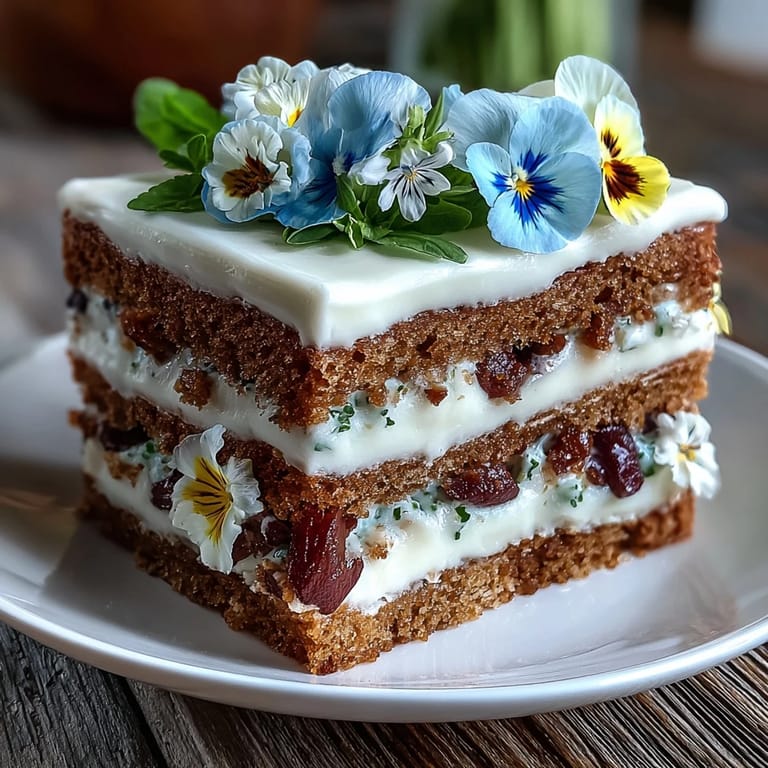
 My sister called me in a panic two days before her garden party, asking if I could make something that screamed spring without being too fussy. I'd seen pressed flowers in a vintage cookbook at an estate sale and thought, why not try them on a cake? The result was so stunning that three guests asked for the recipe before dessert was even finished. That's when I realized this cake had become my go-to for any celebration that needed a little botanical magic.
Last spring I made this for my neighbor who'd just moved in, and I pressed the flowers from her own garden the week before. Watching her face when she realized those violets and pansies were from her own backyard made the whole project feel less like baking and more like creating a memory. She still talks about that cake three seasons later.
Ingredients
- All-purpose flour (2 1/2 cups): The foundation of a tender crumb, and sifting it with the leavening agents prevents dense pockets that can ruin the delicate texture.
- Baking powder (2 1/2 tsp): This is your lift, so make sure it's fresh and not sitting in your cabinet since last year or your cake will be disappointingly flat.
- Salt (1/2 tsp): A tiny amount that you'll barely taste but absolutely need to balance the sweetness and enhance the vanilla.
- Unsalted butter (1 cup, softened): Room temperature is non-negotiable here because cold butter won't cream properly and you'll end up with a dense cake instead of the cloud you're aiming for.
- Granulated sugar (1 3/4 cups): This creams with the butter to incorporate air, which is what gives the cake its feather-light structure.
- Eggs (4 large, room temperature): Cold eggs will seize up the batter and create an uneven texture, so pull them out of the fridge at least 30 minutes before you start.
- Pure vanilla extract (1 tbsp plus 1 tsp): The real stuff matters here because it adds warmth and depth that artificial extract just can't match.
- Whole milk (1 cup, room temperature): Alternating dry and wet ingredients creates a balanced batter that bakes evenly and stays moist.
- Heavy whipping cream (2 cups, cold): Make sure it's genuinely cold or it won't whip up to those glossy stiff peaks you need for frosting.
- Powdered sugar (1/2 cup): Use it instead of granulated for the frosting because it dissolves smoothly and won't give you a grainy texture.
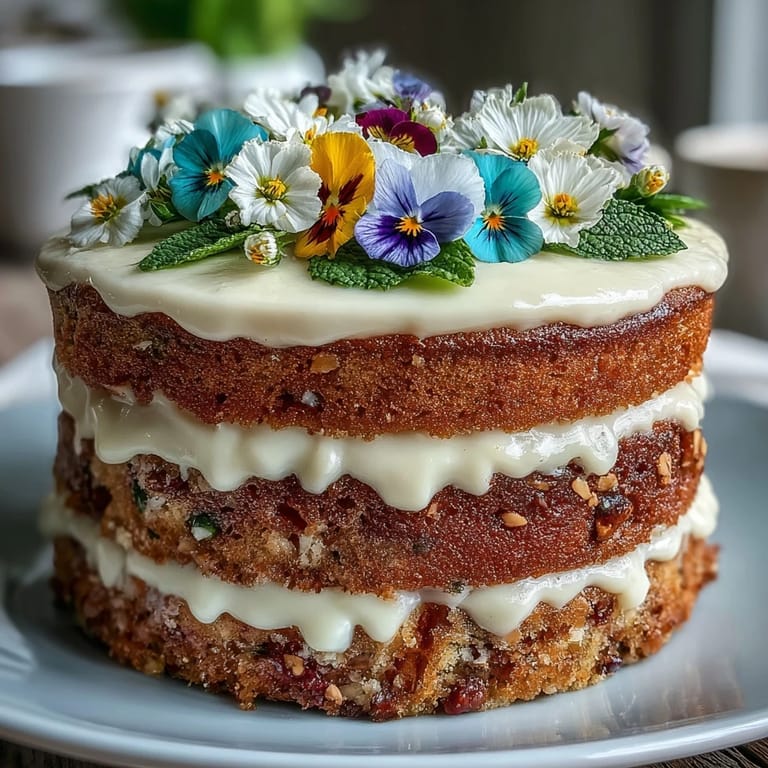
- Pressed edible flowers (1/2–1 cup): These are the stars of the show, so source them from an organic grower or press your own from an unsprayed garden at least 24 hours ahead.
- Fresh mint leaves (optional): A touch of green adds freshness and keeps the design from feeling one-note.
Tired of Takeout? 🥡
Get 10 meals you can make faster than delivery arrives. Seriously.
One email. No spam. Unsubscribe anytime.
Instructions
- Get your oven ready and prep the pans:
- Preheat to 350°F and grease two 8-inch round pans, then line the bottoms with parchment paper so your cake slides out cleanly without any sticking drama. This step takes two minutes but saves you so much heartache.
- Sift the dry ingredients together:
- In a medium bowl, sift flour, baking powder, and salt, then set it aside—this incorporates air and prevents lumps that would create dense pockets in your cake. I learned this the hard way after making a cake with uneven texture my first attempt.
- Cream butter and sugar until it's fluffy:
- In a large bowl, beat softened butter with sugar for 3–4 minutes until it's pale, light, and looks almost whipped like soft serve ice cream. You'll hear the mixer's rhythm change when it's ready, shifting from a grinding sound to something almost airy.
- Add eggs one at a time with care:
- Add each egg individually and mix well after each one before adding the next—this prevents the batter from looking curdled or broken. Then stir in your vanilla extract and take a moment to smell how good your batter already is.
- Combine wet and dry in three parts:
- Add a third of the flour mixture, then half the milk, then another third of flour, then the remaining milk, finishing with the last flour portion. Stir gently until just combined because overmixing develops gluten and toughens the cake, so stop as soon as you don't see streaks of flour.
- Divide batter and bake:
- Pour equal amounts into each prepared pan and smooth the tops gently, then slide them into the oven for 30–35 minutes until a toothpick inserted in the center comes out clean. The kitchen will smell like vanilla heaven, and you'll start getting impatient.
- Cool with patience:
- Let the cakes rest in their pans for 10 minutes so they firm up slightly, then turn them out onto wire racks to cool completely before frosting. Trying to frost a warm cake is a recipe for melted frosting running everywhere.
- Whip the cream frosting:
- In a chilled bowl, beat cold heavy cream with powdered sugar and vanilla until you see stiff peaks form—this takes about 3–4 minutes with an electric mixer. Be careful not to overbeat or you'll have grainy butter instead of fluffy frosting.
- Layer and frost the cake:
- Place one cooled cake layer on your serving plate, spread a generous layer of whipped cream on top, then add the second layer and frost the entire outside. Use an offset spatula and work quickly since whipped cream softens easily, but embrace the rustic feel if it's not perfectly smooth.
- Press flowers and chill:
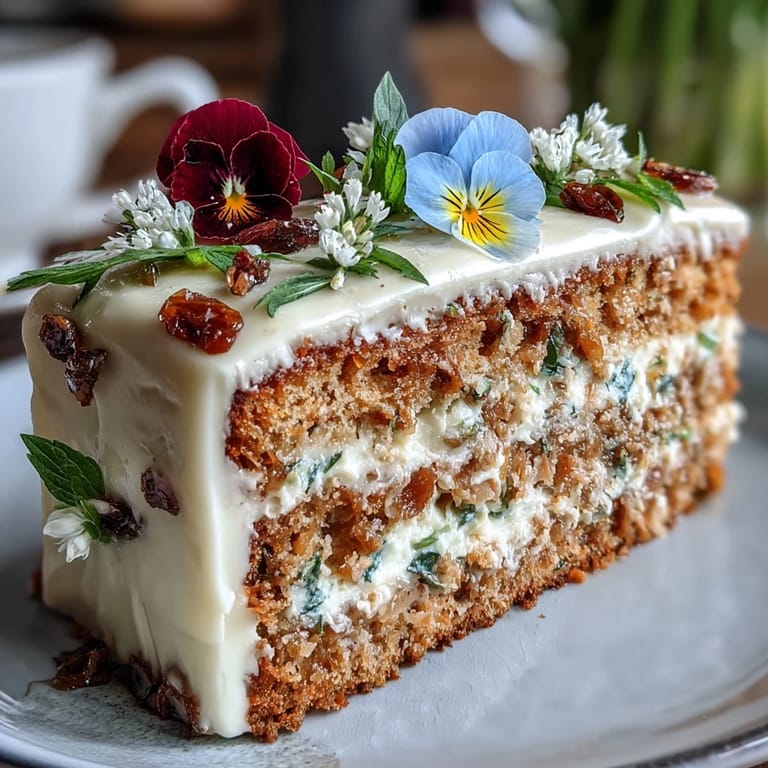
- Gently press your pressed edible flowers directly onto the frosting, arranging them in whatever pattern feels beautiful to you—there's no wrong way to do this. Refrigerate for at least 30 minutes so the frosting sets and the flowers stay in place, which also makes slicing cleaner.
 Pin It
 There was a moment during my neighbor's party when someone asked if the flowers were real or if I'd somehow painted them on, and her genuine confusion made everyone laugh. That's the magic of this cake—it looks so impossible that people can't quite believe it's real until they take a bite and taste actual flowers and buttercream together.
The Secret to Tender Cake
The real trick I've learned is that room temperature ingredients matter far more than people think. I used to skip this step thinking it didn't make much difference, but switching everything to room temperature—especially eggs and milk—changed the texture from slightly grainy to impossibly delicate. The butter creams faster, the eggs emulsify better, and the whole batter just behaves better in the oven.
Sourcing and Pressing Your Flowers
Finding good edible flowers was harder than I expected, but I discovered that farmer's markets often have vendors who specialize in organic edible flowers, and they can even tell you exactly when they were picked. If you want to press flowers from your own garden, do it on a dry day and use heavy books like dictionaries or old cookbooks as your press—it sounds romantic and it actually works. The flowers should feel papery and fragile after 24 hours, and that's when you know they're ready to stick to your frosting without falling apart.
Making It Your Own
One spring I added lemon zest to the batter because I'd just been gifted a bag of beautiful Meyer lemons, and it brought a subtle brightness that made everything taste fresher and more alive. You can also play with the frosting by adding a teaspoon of almond extract or even a pinch of edible floral water if you want to lean into the botanical theme. The base recipe is forgiving enough that small variations feel like happy experiments rather than recipe disasters.
- If you want a citrusy twist, add 1–2 teaspoons of lemon or orange zest directly to your creamed butter and sugar.
- For a non-floral occasion, you can skip the pressed flowers entirely and decorate with fresh berries or candied citrus peel instead.
- Make sure to keep your finished cake chilled until serving time because whipped cream frosting softens faster than buttercream, especially in warm weather.
 Pin It
 This cake has a way of turning ordinary afternoons into something memorable, whether you're baking it for a celebration or just because you found beautiful flowers at the market. Every time I make it, I'm reminded that sometimes the most elegant things come from simple ingredients treated with a little care and attention.
Recipe FAQs
- → How do I press edible flowers for decoration?
Place flowers between parchment paper and press with heavy books for 24 hours to flatten and dry them gently without losing color.
- → Can I prepare the cake in advance?
Yes, baking and chilling the frosted cake a few hours ahead helps the flavors meld and ensures flowers stay intact.
- → What type of flowers are suitable for this cake?
Use organic, pesticide-free flowers like violets, pansies, nasturtiums, rose petals, and chamomile for safe and attractive decoration.
- → Is the frosting suitable for vegetarians?
The whipped cream frosting contains dairy but no gelatin, making it appropriate for vegetarian diets.
- → How can I add a citrus twist to the cake?
Incorporate 1–2 teaspoons of lemon zest into the batter to introduce a fresh citrus note complementing the vanilla and flowers.