 Pin It
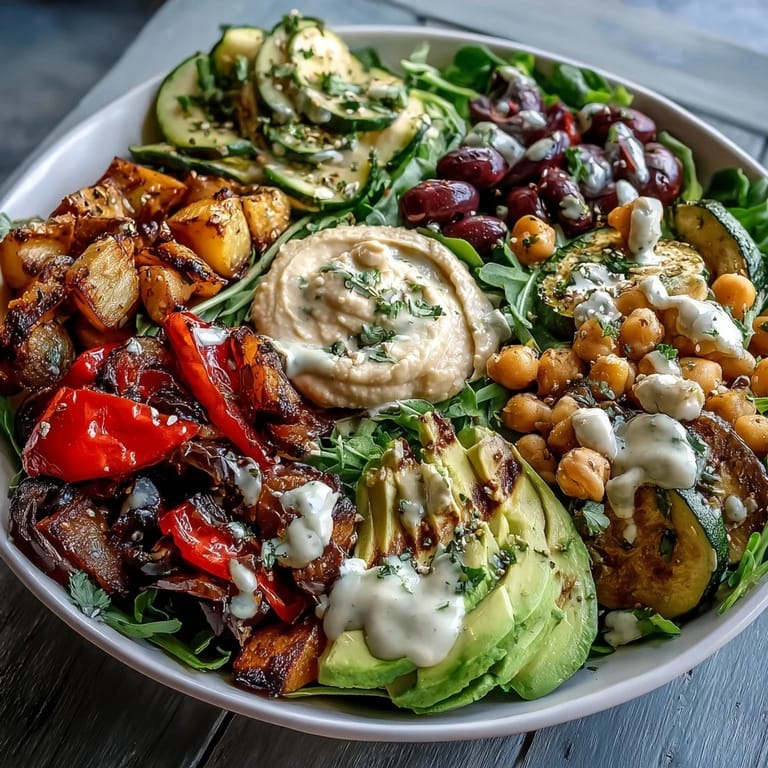
 There's something deeply satisfying about building a bowl instead of plating a meal. I discovered this while standing in my kitchen on a gray Tuesday afternoon, overwhelmed by half a dozen vegetables that needed using and the sudden craving for something that felt both simple and complete. This Vegan Mediterranean Buddha Bowl came together almost by accident that day, layering flavors and textures until each spoonful felt like a small celebration. Now it's become my answer to the question nobody asks but everyone needs: what do I make when I want something nourishing that doesn't feel like an obligation?
I made this for a friend who'd just gone vegan and was nervous about missing out on satisfying meals. Watching her face light up when she tasted that creamy tahini hitting roasted vegetables and buttery avocado reminded me that the best meals aren't always complicated—they're just thoughtfully composed. She now texts me photos of her own variations, and somehow that feels like the highest compliment.
Ingredients
- Mixed salad greens: The foundation deserves quality, so choose a blend that excites you—I prefer the peppery bite of arugula mixed with tender spinach and sturdy romaine for different textures.
- Zucchini: Cut into half-moons about a quarter-inch thick so they get crispy edges while staying tender inside.
- Red bell pepper: This vegetable caramelizes beautifully and brings natural sweetness that balances the tahini's earthiness.
- Red onion: Sliced thin so it softens and mellows in the oven rather than staying sharp and raw.
- Eggplant: Dice it small so it roasts faster and absorbs all those smoky spice flavors.
- Olive oil: Use something you enjoy tasting since it's the main fat here—it makes a real difference.
- Dried oregano and smoked paprika: These two together create that Mediterranean backbone that makes you feel transported.
- Chickpeas: If using canned, rinse them thoroughly under cold water and let them drain completely so they get slightly crispy in the bowl.
- Avocado: Wait until assembly to slice it, and if you're prepping ahead, toss slices gently with a squeeze of lemon to prevent browning.
- Kalamata olives: The brininess is essential—don't skip them or use a milder variety unless you specifically want to tone down that salty, tangy punch.
- Hummus: Store-bought works perfectly, but if you make your own, you control the tahini-to-chickpea ratio which changes everything about the texture.
- Tahini: Buy the good stuff with just sesame seeds and maybe salt—cheap versions taste chalky and bitter.
- Lemon juice: Fresh is non-negotiable here; bottled lemon just tastes like sadness in a dressing.
- Garlic: One clove is plenty because raw garlic in dressing can overwhelm quickly.
- Ground cumin: This warm spice ties all the roasted vegetable flavors together into something cohesive.
Tired of Takeout? 🥡
Get 10 meals you can make faster than delivery arrives. Seriously.
One email. No spam. Unsubscribe anytime.
Instructions
- Heat your oven and prep the vegetables:
- Set the oven to 425°F and while it preheats, cut all your vegetables into roughly similar sizes so they roast evenly. This mindful prep is what separates scattered cooking from flowing cooking.
- Season and roast with intention:
- Toss your vegetables with olive oil, oregano, smoked paprika, salt, and pepper, then spread them single-layer on a baking sheet. Around the 15-minute mark, pull the sheet out and toss everything so the edges that were touching the pan get exposure to heat—this is where the caramelization magic happens.
- Build your tahini dressing:
- While vegetables roast, whisk tahini, lemon juice, water, minced garlic, and cumin together in a bowl. Start with two tablespoons of water and add more slowly until you reach that perfect pourable consistency—too thick and it clumps, too thin and it disappears into the greens.
- Assemble with architecture in mind:
- Divide your greens among four bowls, then arrange chickpeas, roasted vegetables, avocado slices, and olives in sections rather than mixing everything together. This way each bite has multiple flavors and textures instead of becoming a uniform mush.
- Dress at the last second:
- Drizzle tahini dressing over the top just before eating so the greens stay crisp and the warm vegetables don't wilt everything into sadness.
 Pin It
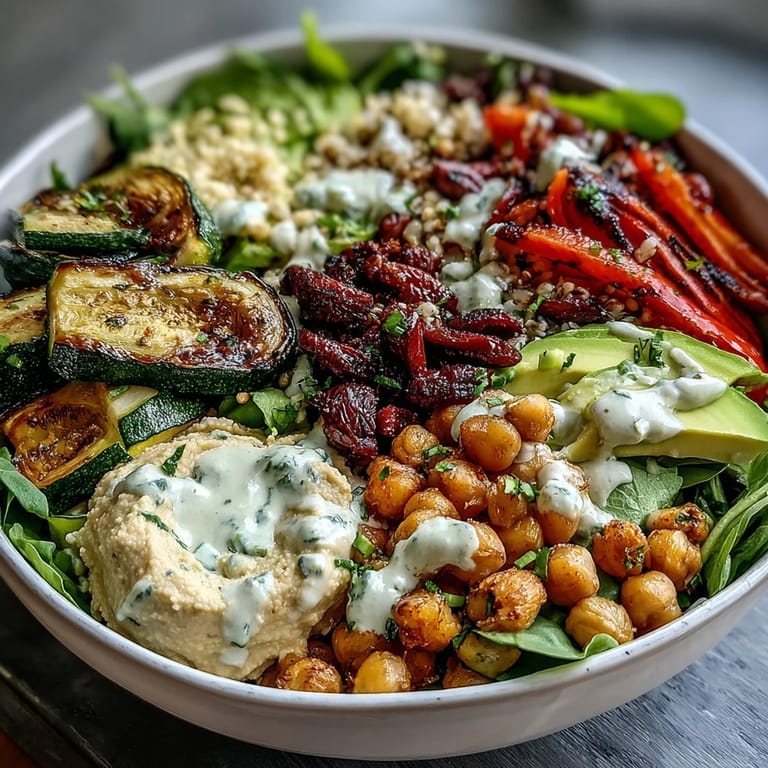
 There's a moment when you pull that baking sheet out of the oven and the smell hits you—caramelized vegetables mixed with oregano and paprika—and you remember why you cook at all. That's when this bowl stops being meal prep and becomes something worth savoring slowly.
Why This Bowl Works for Any Day
This isn't precious food or fussy food—it's the kind of meal that tastes thoughtful without demanding perfection. You can make it on Wednesday with whatever vegetables didn't get forgotten in your crisper drawer, or plan it carefully for Sunday meal prep. The architecture of the bowl means each component stands on its own, so if you're out of one thing, you can improvise without everything falling apart.
Making It Your Own
The beauty of a Buddha bowl is that it's more about proportions and balance than exact ingredients. I've made this with roasted sweet potato when I wanted more sweetness, swapped the hummus for tahini paste when I was lazy, and even added a scoop of quinoa on nights when I was genuinely hungry rather than just seeking nourishment. Your version will tell your story, not mine.
Prep Ahead Confidence
This is one of those rare meals where everything tastes better when components are made separately rather than tossed together immediately. I often roast the vegetables the night before, make the dressing in the morning, and keep greens and avocado in the fridge ready to assemble. It's not about being fancy or organized—it's about making your busy self feel taken care of by your calmer self from yesterday.
- Roasted vegetables last three days in the fridge and actually taste better as they cool and flavors deepen.
- The tahini dressing will separate slightly as it sits, so give it a quick whisk before drizzling.
- Assemble the bowl only when you're ready to eat so the greens stay crisp and avocado doesn't oxidize.
 Pin It
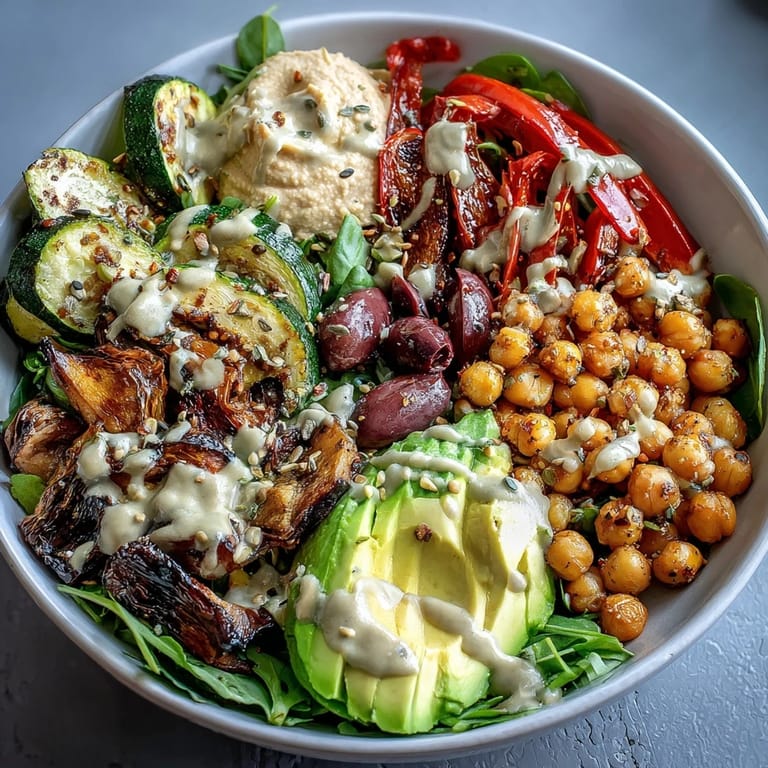
 This bowl taught me that the most nourishing meals are often the simplest ones, built from respect for each ingredient rather than complicated technique. Make it, enjoy it, and let it become whatever your kitchen needs it to be.
Recipe FAQs
- → How long does this bowl keep in the refrigerator?
Store components separately in airtight containers for up to 4 days. Keep the dressing and hummus apart from the greens and vegetables to maintain freshness. Assemble just before serving.
- → Can I use different vegetables for roasting?
Absolutely. Try cherry tomatoes, sweet potatoes, cauliflower, or Brussels sprouts. Adjust roasting times as needed—denser vegetables like sweet potatoes may take a few extra minutes.
- → What can I substitute for tahini?
Cashew butter or almond butter work well in the dressing. For a nut-free option, use extra olive oil blended with a bit of sunflower seeds for creaminess.
- → Is this bowl high in protein?
Each serving provides about 12g of protein from chickpeas and tahini. Add more protein by including quinoa, lentils, or extra chickpeas if desired.
- → Can I make this ahead for meal prep?
Yes. Roast the vegetables, cook the chickpeas, and prepare the dressing in advance. Store everything separately and assemble when ready to eat. The vegetables actually taste better after resting overnight.
- → What's the best way to reheat roasted vegetables?
Reheat in a 350°F oven for 10-12 minutes to maintain texture, or warm in a skillet over medium heat. Avoid microwaving as they can become soggy.