 Pin It
 There's something magical about the smell of garlic transforming in the oven—it shifts from sharp and pungent to something almost sweet and buttery. I discovered this soup on a particularly gray afternoon when my kitchen felt cold despite the weather, and I wanted something that would warm me from the inside out. The first spoonful was a revelation: creamy, gentle, with none of the harsh bite you'd expect from garlic. It became my go-to remedy whenever I needed comfort in a bowl, or when someone I cared about needed boosting back to health.
I made this for my mother when she was recovering from being under the weather, and watching her take that first spoonful—really taste it instead of just eating to be polite—told me everything. She asked me to write down the recipe that evening, which meant it had crossed from 'nice meal' into 'something she'd want to make herself.' Now whenever she roasts garlic, she tells me the kitchen smells like my soup.
Ingredients
- Garlic heads: Use large ones, not those tiny golf-ball sized bulbs; the bigger cloves roast more evenly and give you more silky paste to work with.
- Olive oil: A good quality matters here since the garlic becomes the star—don't skimp on the cheap stuff.
- Unsalted butter: Let it melt slowly with the onions to build a gentle, sweet foundation.
- Yellow onion: Chop it fairly small so it disappears completely into the soup once blended.
- Russet potato: This starchy variety breaks down beautifully and creates that natural creaminess without added cream.
- Vegetable broth: Low-sodium lets you control the salt level—store-bought broth can be surprisingly aggressive.
- Whole milk or plant-based milk: Add this at the end to preserve its delicate flavor; boiling it can turn it bitter.
- Dried thyme and bay leaf: These gentle herbs let the garlic shine without competing for attention.
- Fresh parsley: A sprinkle at the end gives brightness that makes you taste everything more clearly.
Tired of Takeout? 🥡
Get 10 meals you can make faster than delivery arrives. Seriously.
One email. No spam. Unsubscribe anytime.
Instructions
- Roast the garlic until it's golden and sweet:
- Preheat your oven to 400°F and slice the tops off each garlic head to expose the cloves inside. Drizzle generously with olive oil, wrap each head in foil, and slide them into the oven for 35 to 40 minutes—you'll know they're ready when they're deeply golden and a knife slides through the cloves like butter. Let them cool just enough to handle, then squeeze the soft garlic out of its papery skin into a small bowl.
- Build your flavor base with onion and butter:
- In a large pot over medium heat, melt the butter and listen for that gentle sizzle when you add the chopped onion. Stir occasionally for about 5 minutes until the onion turns translucent and sweetly aromatic, then you'll know it's ready for the next step.
- Combine everything and let it simmer:
- Add the diced potato, roasted garlic, thyme, bay leaf, and vegetable broth to the pot and bring it to a boil. Turn the heat down to a gentle simmer and let it bubble away for about 15 minutes until the potatoes are completely tender when you poke them with a fork.
- Blend until silky smooth:
- Fish out the bay leaf, then use an immersion blender to purée the soup right in the pot, moving it around until there are no visible lumps. If you prefer, carefully transfer everything to a regular blender in batches and blend until completely smooth, then pour it back into the pot.
- Finish with milk and season gently:
- Stir in the milk slowly and warm it through over low heat without letting it boil. Taste as you go, adding salt and pepper until it tastes like comfort in a spoon—you want to taste the garlic first, then the creaminess.
- Serve with a flourish:
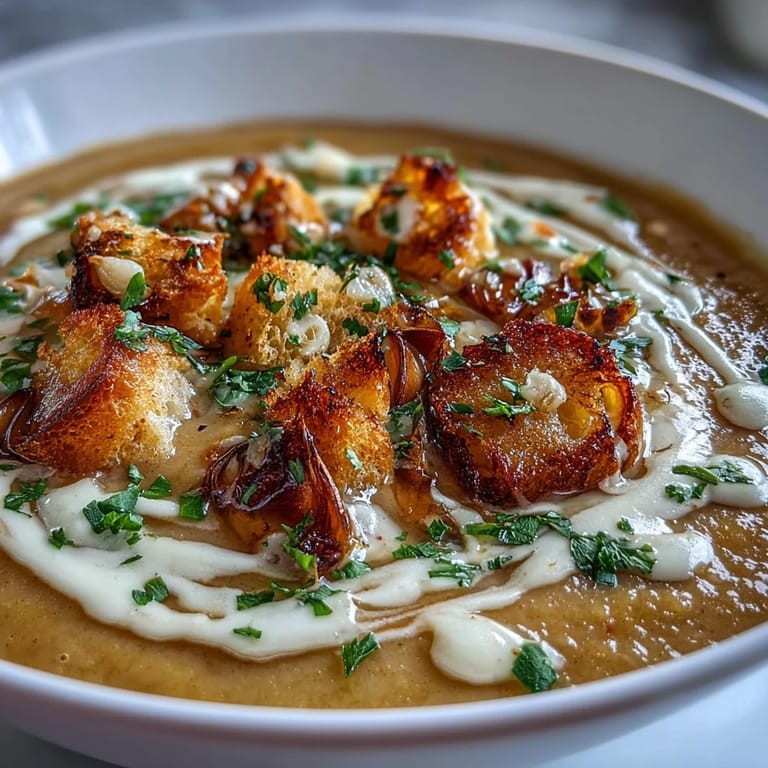
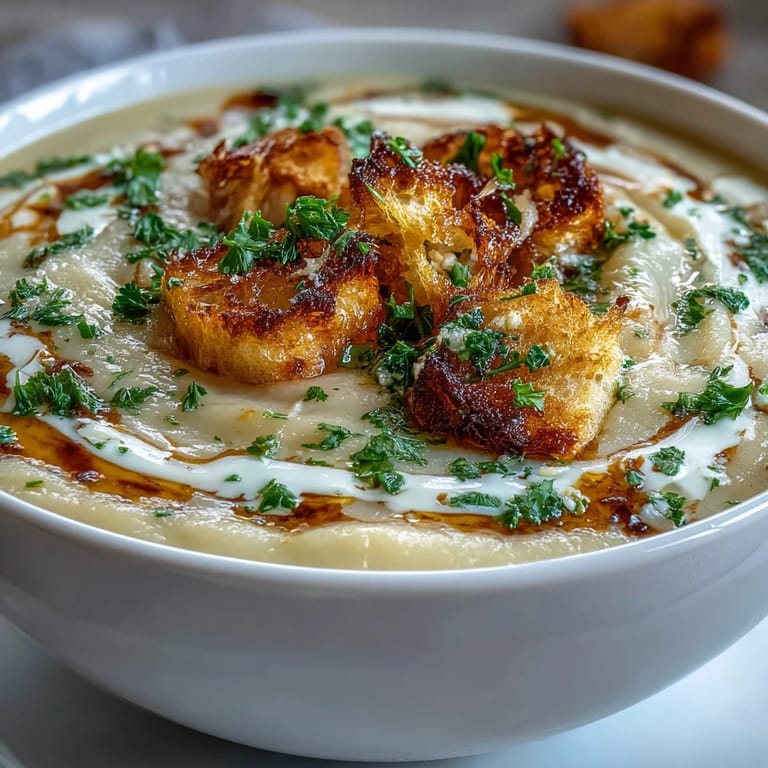
- Ladle the soup into bowls and top with a sprinkle of fresh parsley and croutons if you like the contrast of crunch. The bright green of the parsley wakes up the pale soup and reminds you that something this comforting is actually quite light.
 Pin It
 This soup taught me that sometimes the most nourishing meals are the simplest ones, built on just a few ingredients treated with care. It's become the thing I make when I want to say 'I'm thinking of you' without saying much at all.
The Secret of Roasted Garlic
The first time I roasted garlic on purpose—not as a side note in some other recipe—I was amazed at how the smell changed. Raw garlic announces itself loudly, almost aggressively, but roasted garlic becomes whisper-soft and almost sweet, almost like caramel made from something savory. This is because the heat breaks down the harsh sulfur compounds that make raw garlic bite, and converts the natural sugars in the cloves into something deeper and more complex. Once you understand this transformation, you'll start roasting garlic for other things too—spreading it on bread, stirring it into mashed potatoes, using it as a secret weapon in salad dressings.
Why This Soup Feels Like More Than Soup
There's a reason garlic has been called a cure-all in kitchens across centuries; whether that's folklore or actual immunity-boosting magic probably matters less than how it feels to eat something warm and garlicky when you need it most. This soup is gentle enough that you can eat it when your appetite is fragile, but flavorful enough that you don't feel like you're eating invalid food. It sits at the intersection of comfort and nourishment, which is maybe why it keeps getting requested.
Making It Your Own
Once you've made this soup a few times, you'll start imagining variations without meaning to. Some people add a pinch of cayenne for warmth, or a splash of white wine for brightness, or crispy sage leaves instead of parsley for an earthier finish. I've made it with roasted garlic that was infused with rosemary, and another time I stirred in some nutmeg at the very end because I had a hunch. The base is forgiving enough to welcome these experiments while staying true to what makes it special.
- A squeeze of lemon juice at the table brightens everything without changing the character of the soup.
- If you have homemade croutons or good bread to toast, use them—they become little flavor anchors in each spoonful.
- This soup freezes beautifully for up to three months, so make a double batch and have comfort waiting in your freezer.
 Pin It
 This soup has taught me that the best recipes are the ones you return to without thinking, the ones that feel like coming home. Make it whenever you need something warm, something kind, something that tastes like someone cares.
Recipe FAQs
- → Can I make this soup ahead of time?
Absolutely. This soup actually develops deeper flavor when made a day ahead. Store it in an airtight container in the refrigerator for up to 3 days. Reheat gently over medium-low heat, adding a splash of milk or broth if it thickens too much.
- → How do I roast the garlic properly?
Cut off the top third of each garlic head to expose the cloves. Drizzle with olive oil, wrap tightly in foil, and roast at 400°F for 35-40 minutes. The cloves should be soft and golden brown. Let them cool slightly before squeezing out the softened garlic.
- → Can I freeze roasted garlic soup?
Yes, freeze for up to 3 months. Cool completely before transferring to freezer-safe containers. Thaw overnight in the refrigerator. The texture may change slightly upon reheating, but a quick whisk or blend will restore smoothness.
- → What can I serve with this soup?
Crusty bread, garlic bread, or homemade croutons are classic choices. A simple green salad with vinaigrette balances the richness. For a heartier meal, pair with a grilled cheese sandwich or roasted vegetables.
- → Is this soup suitable for special diets?
This soup is naturally vegetarian and can be made vegan by using plant-based butter and milk. It's gluten-free when served without traditional croutons. The simple ingredients make it adaptable to various dietary needs.
- → Why use potato in the soup?
Potato acts as a natural thickener, creating velvety texture without heavy cream. The starch breaks down during cooking, lending body and creaminess. Russet potatoes work best due to their high starch content and mild flavor.