 Pin It
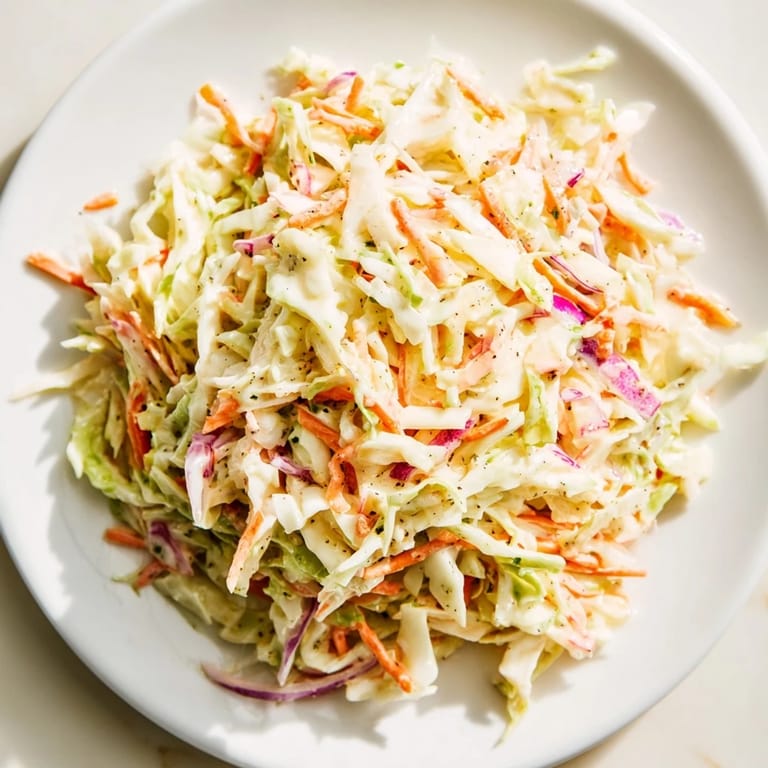
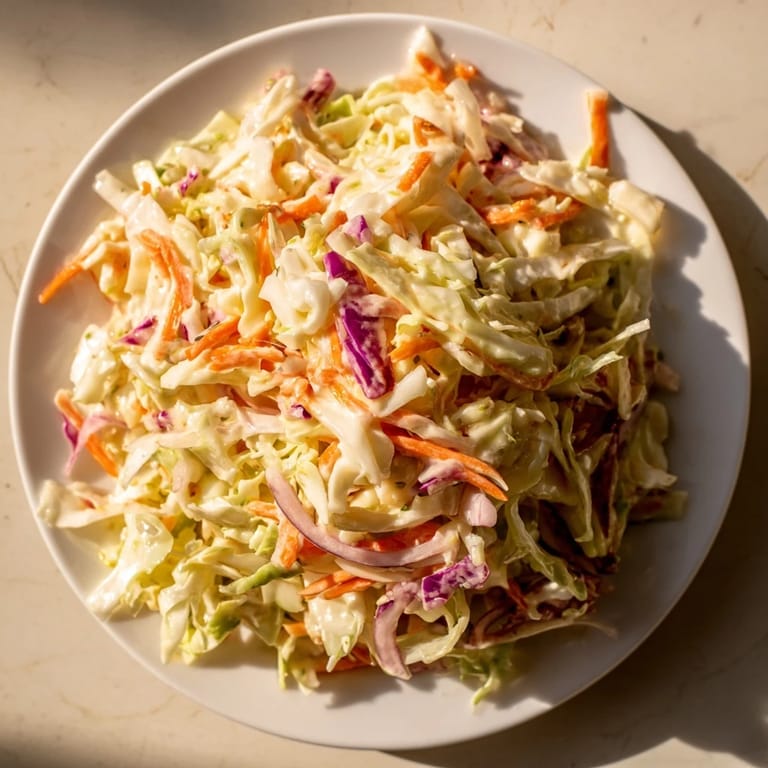
 There's something about a pile of fresh cabbage that makes me want to slice it into ribbons and turn it into something crisp and alive. Years ago, my neighbor brought over a container of homemade coleslaw to a summer cookout, and I watched people bypass the fancy sides to keep coming back for it—something about the way the dressing clung to each shred made it impossible to resist. Since then, I've learned that the best coleslaw isn't fussy; it's just good vegetables and a dressing that somehow tastes both tangy and creamy at the same time.
I remember making this the night before a backyard gathering, worried it would turn watery overnight. My partner tasted it the next morning before guests arrived and gave me that look—the one that means you've done something right. That's when I realized coleslaw isn't just a supporting player; it's the cooling relief people need alongside heavier food.
Ingredients
- Green cabbage, about 700 g: The foundation of everything here—choose one that feels dense and heavy, not loose or soft, and shred it thin enough that the dressing can coat every piece.
- Carrots, 2 medium: Grated fine so they soften slightly as the salad sits and add natural sweetness to balance the tang.
- Red onion, 1 small, finely sliced: Optional, but the bite it adds is worth the few extra seconds of slicing.
- Mayonnaise, 120 ml: This is what makes it creamy—don't skip it or substitute with something thin, or you'll lose the whole texture.
- Apple cider vinegar, 2 tbsp: The sharp note that wakes everything up and keeps the cabbage tasting fresh, not heavy.
- Dijon mustard, 1 tbsp: A spoonful adds complexity and helps emulsify the dressing so it clings better.
- Sugar, 1 tbsp: Just enough to round out the flavors without making it sweet—think of it as balance.
- Celery seed, 1/2 tsp: Optional, but if you use it, you'll notice how it adds a subtle warmth that makes people ask what's in this.
- Salt and freshly ground black pepper: Start with less than you think; you can always add more after the dressing sits.
Tired of Takeout? 🥡
Get 10 meals you can make faster than delivery arrives. Seriously.
One email. No spam. Unsubscribe anytime.
Instructions
- Prep your vegetables:
- Shred the cabbage into thin, even pieces—a mandoline makes this faster, but a good knife works just fine if you take your time. The thinner you go, the better the dressing coats everything.
- Combine the vegetables:
- Toss the cabbage, carrots, and red onion together in a large bowl, and don't be shy about mixing it all up so nothing gets bunched in one spot.
- Whisk the dressing:
- In a separate bowl, combine the mayo, vinegar, mustard, sugar, and celery seed—whisk until it's smooth and there are no streaks of mustard left.
- Bring it together:
- Pour the dressing over the vegetables and toss everything until every shred is coated—this takes a minute or two, but it's worth it to make sure nothing's left undressed.
- Let it chill:
- Cover and refrigerate for at least thirty minutes—this gives the flavors a chance to meld and the cabbage time to soften just slightly without turning mushy.
- Taste and adjust:
- Before serving, give it another toss and taste it; add a pinch more salt, pepper, or vinegar if it needs it.
 Pin It
 One afternoon, a friend who usually skips anything vegetables-heavy came back for thirds of my coleslaw and admitted she'd been wrong about salads her whole life. That moment reminded me that good food isn't about fancy techniques; it's about showing up with something simple and honest that actually tastes good.
When to Shred and When to Slice
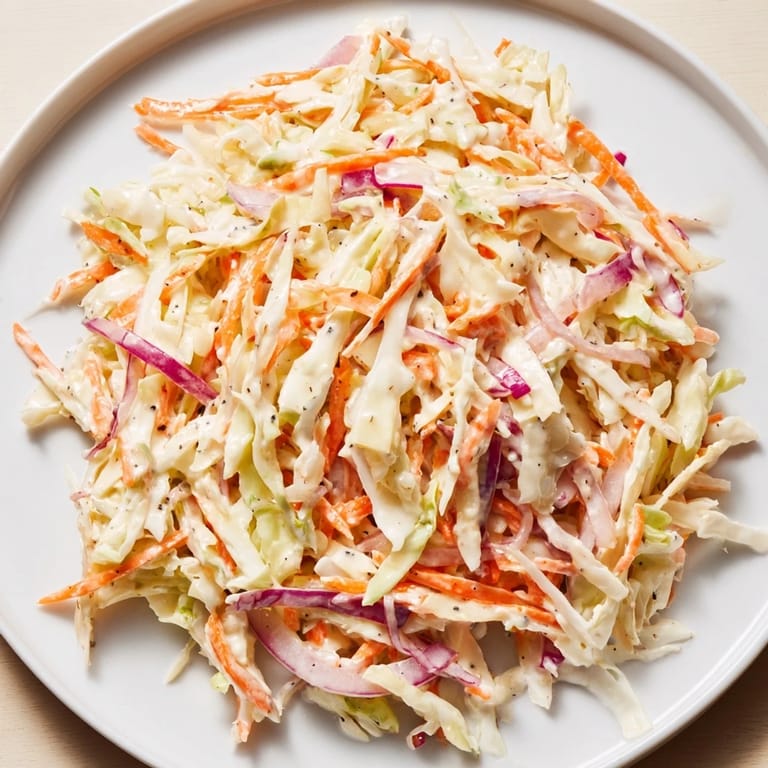
I've tried both methods—fine shreds and thicker slices—and they give totally different textures. The shreds break down slightly as the dressing sits and create a creamier mouthfeel, while thicker slices stay crunchier and hold their shape better if you're serving it the same day. The thinner shreds also absorb the dressing better, so if you like bold, well-coated cabbage, go fine. If you prefer it crisp and lighter, don't shred quite as thin.
The Dressing Difference
The beauty of this dressing is that it's flexible without falling apart—you can lighten it with Greek yogurt, swap in olive oil and extra vinegar for something tangier, or even add a splash of lemon juice for brightness. I've learned that the ratio of acid to fat matters more than the exact ingredients, so taste as you go and adjust toward what you like. If it tastes too rich, add more vinegar; if it's too sharp, a little more mayo smooths it out.
Storage and Serving
This coleslaw actually improves as it sits, so making it the day before a gathering takes pressure off your day-of schedule. It keeps well in the fridge for up to a day, though after that the cabbage starts to release water and it gets softer. The best move is to serve it cold straight from the fridge, especially alongside something warm and rich like pulled pork or fried chicken.
- If you find it's gotten watery after a day, drain some of the liquid before serving.
- Toss it again just before serving to redistribute any settled dressing and make sure it looks fresh.
- Make it at least an hour ahead so the flavors have time to settle—you'll taste the difference.
 Pin It
 Coleslaw is the kind of recipe that reminds you that simple food made with care tastes better than anything complicated. Keep making it, keep tasting it as you go, and it'll become one of those dishes you make without thinking because you know exactly how it should taste.
Recipe FAQs
- → What vegetables are used in this salad?
Shredded green cabbage, grated carrots, and optionally finely sliced red onion.
- → How is the dressing prepared?
Whisk together mayonnaise, apple cider vinegar, Dijon mustard, sugar, celery seed, salt, and pepper until smooth.
- → Can the salad be made ahead of time?
Yes, it can be prepared up to one day in advance and is best served chilled.
- → Are there lighter alternatives for the dressing?
Yes, substitute half the mayonnaise with Greek yogurt or switch to a vinegar and olive oil based dressing.
- → What tools are needed for preparation?
A large mixing bowl, small bowl, whisk, chef's knife or mandoline, and vegetable peeler.
- → Is this salad suitable for special diets?
Yes, it is vegetarian and gluten-free, but contains eggs and mustard allergens.