 Pin It
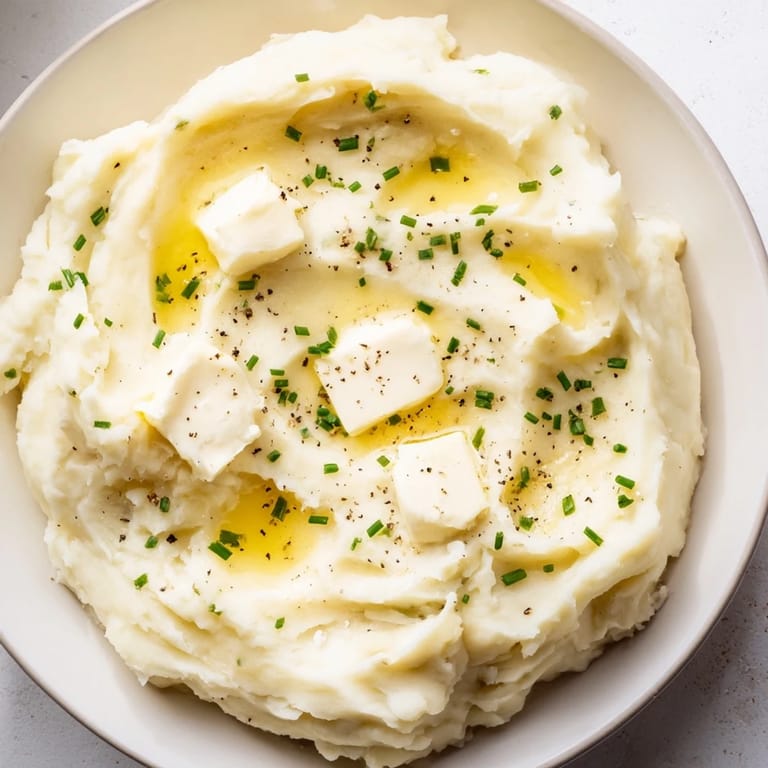
 There's something about the smell of potatoes boiling that signals comfort is coming. My grandmother used to keep a pot of these on the stove every Sunday, and I'd wander into the kitchen drawn by that earthy steam. She taught me that good mashed potatoes aren't fancy, they're just honest—butter, milk, and potatoes that actually taste like potatoes. The first time I made them without her hovering nearby, I overworked the spoon and ended up with glue instead of clouds. That failure stuck with me more than any perfect batch ever could.
I made these for my roommate's birthday dinner last spring, and he asked for seconds before finishing firsts. That moment when someone closes their eyes while eating something you made—that's when mashed potatoes stop being a side dish and become proof that simple things done right are never forgettable. The bowl came back empty except for a note that said 'more please' in terrible handwriting.
Ingredients
- Yukon Gold or Russet potatoes (2 lbs): Yukon Golds are forgiving and buttery on their own, while Russets get fluffier—pick based on whether you want richness or cloud-like texture.
- Unsalted butter (4 tbsp): Room temperature is your friend because it blends in without needing to be beaten to death.
- Whole milk (1/2 cup, warmed): Cold milk seizes the butter and creates lumps; warming it first is the secret move nobody talks about.
- Salt (1 tsp) and black pepper (1/4 tsp): Taste as you go because potatoes are blank canvases and you're the artist.
- Heavy cream or sour cream (optional): Save this for when you want to feel luxurious or are feeding someone who deserves extra kindness.
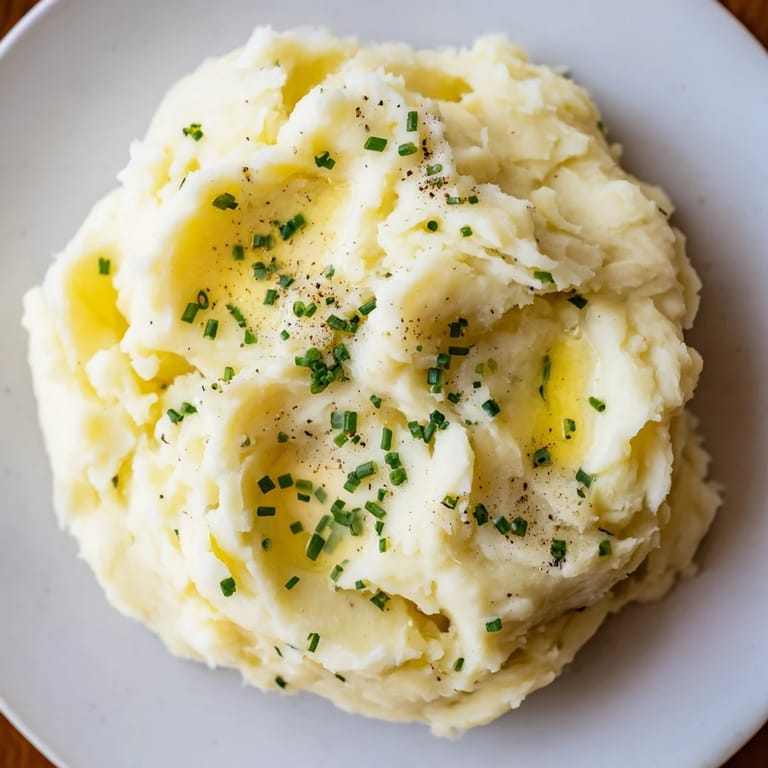
- Fresh chives or parsley: A tiny handful scattered on top transforms presentation from 'homemade' to 'thoughtful.'
Tired of Takeout? 🥡
Get 10 meals you can make faster than delivery arrives. Seriously.
One email. No spam. Unsubscribe anytime.
Instructions
- Get your potatoes ready for the water:
- Cut them into roughly equal chunks so they cook at the same speed. Uneven pieces mean some will be mushy while others are still firm, which is the exact opposite of what you want.
- Boil with intention:
- Salt that water generously—it should taste like the sea. Your potatoes will thank you by absorbing seasoning from the inside out rather than needing you to oversalt at the end.
- Test for doneness with honesty:
- A fork should slide through without resistance, but they shouldn't be falling apart. This takes about 15–20 minutes depending on your chunks and stove mood.
- Drain and let them breathe:
- Return them to the hot pot and let steam escape for a few minutes. This dries them out just enough so they won't absorb liquid and become gluey.
- Add butter and milk like you're teaching them to dance:
- Warm milk matters here because it doesn't shock the potatoes. Add butter first, then milk in stages while you mash, tasting as you go.
- Season and finish:
- Taste before you declare them done. Salt and pepper are adjustable, and this is your moment to make them yours.
 Pin It
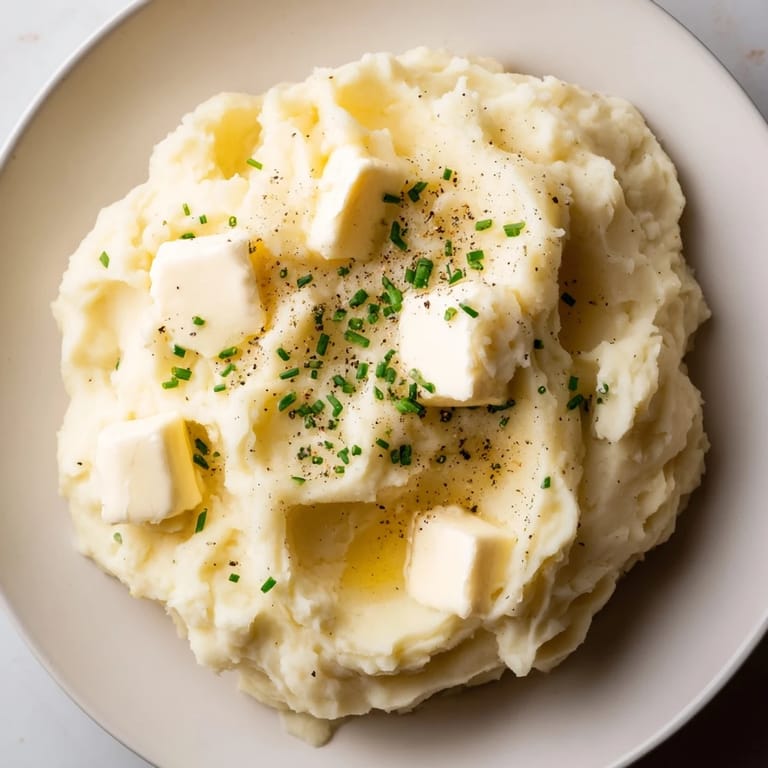
 My sister stopped being a picky eater around the time she realized these weren't just a vegetable side—they were basically mashed clouds that happened to be nutritious. That shift in perspective, from 'I have to eat this' to 'can I have more,' is when you know you've nailed something.
The Ricer Question
I resisted buying a potato ricer for years, convinced it was unnecessary kitchen theater. Then I borrowed one, used it once, and suddenly my mashed potatoes had a texture I couldn't achieve with a masher alone—silky without being gluey, light without being fluffy to the point of falling apart. It's not required, but it's the difference between good and 'where have these been my whole life.' Sometimes the tool really does matter.
Temperature as Ingredient
Everything matters more than you'd think at first glance. Warm milk, room-temperature butter, hot potatoes—they're not being fussy, they're just chemistry. When temperatures align, everything incorporates smoothly and you end up with something creamy and cohesive. When they don't, you're fighting the whole way and wondering what went wrong.
Beyond the Basics
Once you have the formula down, mashed potatoes become a canvas for whatever you're feeling. I've added roasted garlic on quiet nights when I wanted comfort, sharp cheddar when showing off, a whisper of truffle oil when I got paid. They've taken bacon bits, scallions, a touch of horseradish—each variation felt like discovering a secret room in a house I thought I knew completely.
- Roasted garlic transforms these from side dish to something worth talking about.
- A small handful of grated sharp cheddar sneaks in without taking over.
- Sautéed onions add sweetness and texture that keeps people reaching for more.
 Pin It
 Mashed potatoes exist in that rare category of food that's both completely unpretentious and deeply satisfying—proof that the best meals don't need to be complicated. Make them, share them, and watch what happens.
Recipe FAQs
- → What type of potatoes work best for a creamy texture?
Yukon Gold or Russet potatoes are ideal as they break down smoothly and create a fluffy, creamy consistency.
- → How can I make mashed potatoes extra smooth?
Using a potato ricer or masher helps eliminate lumps and aerates the potatoes for a silky texture.
- → Can I substitute milk with non-dairy alternatives?
Yes, plant-based milks like almond or oat milk can replace dairy milk to suit dietary preferences.
- → What optional ingredients enhance flavor and richness?
Adding heavy cream or sour cream adds richness, while garnishing with chives or parsley enhances freshness.
- → How should potatoes be cooked before mashing?
Boil peeled potato chunks in salted water until tender, then drain fully before mashing for best results.