 Pin It
 The first time I really understood cornbread was at a potluck where I'd brought a box mix version, only to taste my friend's from-scratch version and feel utterly humbled. Golden, tender, with this perfect balance of sweet and savory that the box mix completely missed—it made me realize that cornbread wasn't just a side dish, it was its own thing entirely. That afternoon, she walked me through her method, and I've been making it ever since. Now when I pull a pan of this out of the oven, that smell alone stops people mid-conversation.
I made this for my neighbor once when she was sick, and she actually teared up about how comforting it was—not in a heavy way, just warm and grounding. That moment reminded me that cornbread has this quiet power to make people feel cared for. It's become my go-to when I'm bringing something to someone's table.
Ingredients
- Yellow cornmeal: This is where the actual cornbread flavor lives; don't skip it or substitute with corn flour, which changes everything.
- All-purpose flour: Balances the cornmeal so you get structure without it becoming too dense or gritty.
- Granulated sugar: Hits that sweet note, but keep it subtle—adjust down if you want savory-leaning cornbread.
- Baking powder and baking soda: These are your lift, especially important since cornbread doesn't have much gluten to help it rise.
- Fine sea salt: Brings everything into focus; table salt works but feels harsher somehow.
- Whole milk or buttermilk: Buttermilk gives you tangier richness, but whole milk keeps it straightforward and classic.
- Eggs: They bind and add richness; don't reduce this.
- Melted butter and vegetable oil: The combination gives you moisture and that luxurious crumb without being greasy.
- Honey: Optional but worth it if you want depth instead of just sweetness.
Tired of Takeout? 🥡
Get 10 meals you can make faster than delivery arrives. Seriously.
One email. No spam. Unsubscribe anytime.
Instructions
- Set the stage:
- Preheat your oven to 400°F and grease your pan thoroughly with butter or spray—this is non-negotiable if you want that crispy edge. I use a cast-iron skillet whenever I can because it holds heat better and gives you that restaurant-quality golden crust.
- Combine the dry team:
- Whisk cornmeal, flour, sugar, baking powder, baking soda, and salt in a large bowl until everything is evenly mixed and you don't see any streaks of ingredients.
- Build the wet base:
- In another bowl, whisk milk, eggs, melted butter, oil, and honey until smooth and homogeneous; this emulsification is what makes the crumb tender.
- Bring it together gently:
- Pour the wet mixture into the dry ingredients and fold with a spatula using as few strokes as possible—overmixing develops gluten and makes cornbread tough and crumbly instead of tender. Stop as soon as you don't see dry flour anymore.
- Into the heat:
- Transfer the batter to your prepared pan and smooth the top with a spatula so it bakes evenly. Bake for 20–25 minutes until the top is deep golden and a toothpick comes out clean or with just a crumb or two.
- The hardest part:
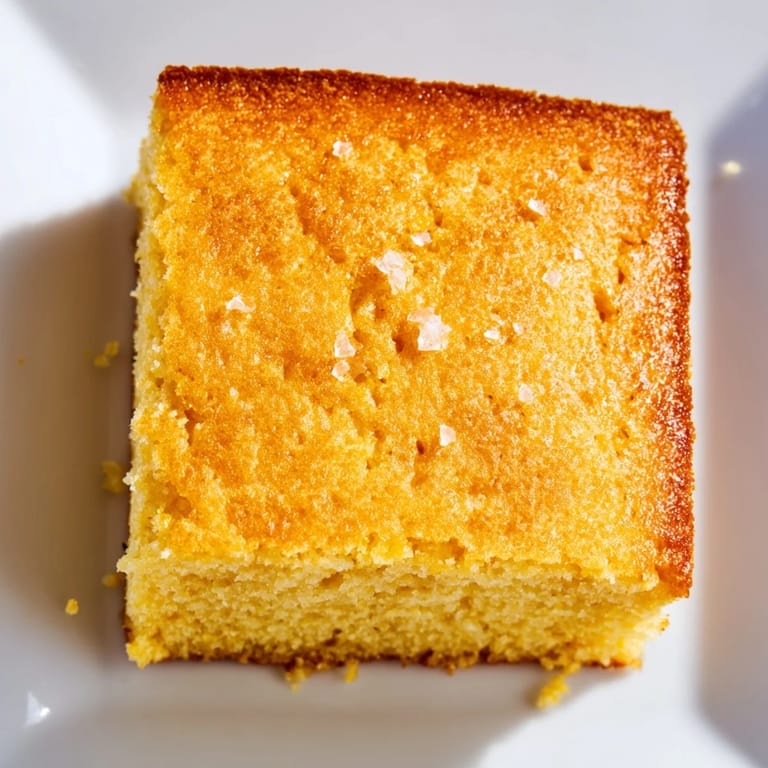
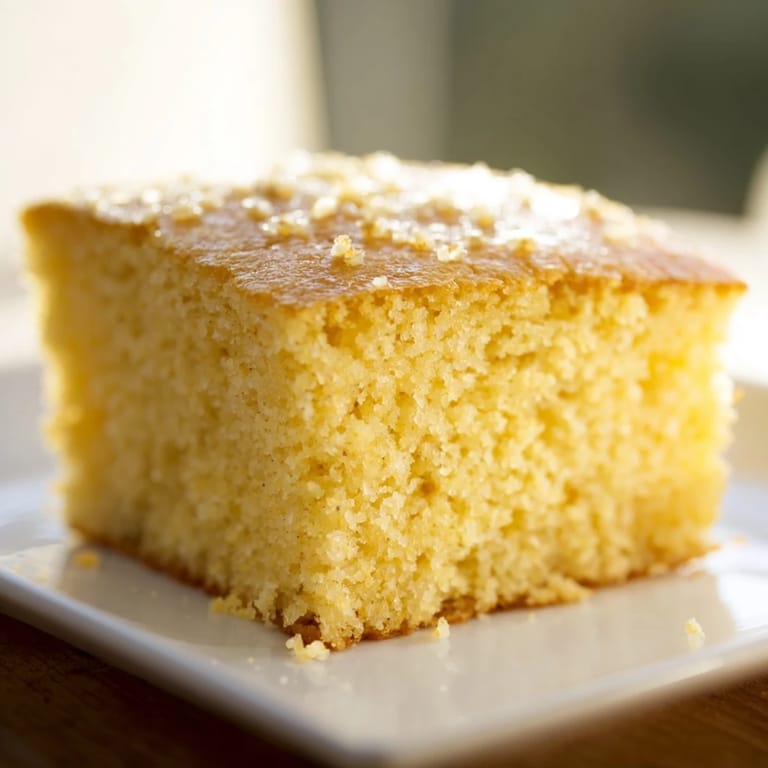
- Let it cool in the pan for 10 minutes before you slice it, even though the aroma is calling you to dive in immediately. This resting time lets the crumb set so you get clean slices instead of crumbles.
 Pin It
 There's something about sitting at a table with cornbread still warm enough to melt butter across its surface, listening to people actually go quiet for a moment because they're tasting something that just works. That's the moment this recipe becomes worth remembering.
Customizing Your Cornbread
The beautiful thing about cornbread is how it accepts additions without losing its identity. For savory versions, fold in sharp cheddar, chopped scallions, or diced jalapeños directly into the batter—use about 1 cup cheese or 1/2 cup herbs so the bread stays cohesive. I've also added crispy bacon bits and fresh corn kernels when I had them on hand, and both made people stop and ask what I did differently.
The Right Pan Matters
Cast-iron skillet is the gold standard because preheating it creates that gorgeous crust, but an 8-inch square baking pan works perfectly fine and heats a bit more gently. Whatever you use, grease it generously so the edges release cleanly and get that textural contrast that makes people come back for seconds.
Serving and Storage
Cornbread is best the day you make it, served warm with honey butter melting into the top or alongside something with sauce—chili, stew, or barbecue. Leftovers stay good for a couple of days wrapped loosely, and you can refresh them gently in the oven or toast slices for breakfast.
- Serve warm cornbread with honey butter, chili, or pulled pork for the complete experience.
- Store covered on the counter for 2 days or freeze wrapped slices for up to a month.
- Refresh cold cornbread at 300°F for 5 minutes if you want it warm again.
 Pin It
 This is the cornbread that changes minds and becomes the one people ask you to bring. Make it once, and it becomes part of your kitchen routine.
Recipe FAQs
- → What makes the crust golden and crisp?
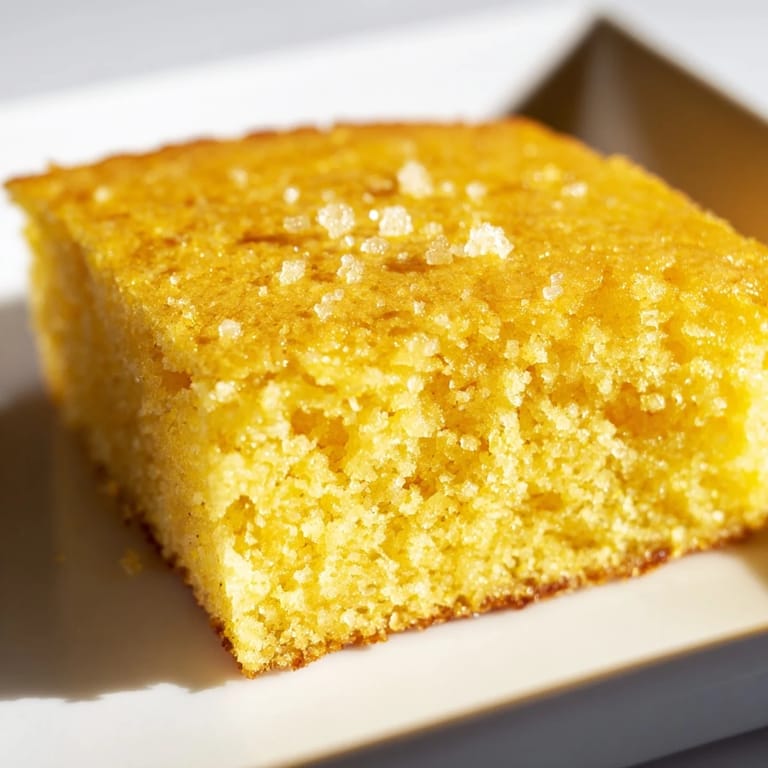
The golden crust forms due to the baked cornmeal and the combination of butter and oil in the batter, which creates a slightly crisp exterior while keeping the inside tender.
- → Can I use buttermilk instead of whole milk?
Yes, substituting buttermilk adds a pleasant tang and helps enhance the tenderness and flavor of the bread.
- → How can I add a savory twist to the corn bread?
Incorporate shredded cheddar cheese, chopped scallions, or diced jalapeño into the batter before baking for a savory variation.
- → What is the best pan choice for baking?
An 8-inch square pan or a 9-inch cast-iron skillet works best, allowing even heat distribution and achieving the desired crust texture.
- → Is it necessary to avoid overmixing the batter?
Yes, gently folding the wet and dry ingredients helps maintain a tender crumb by preventing gluten overdevelopment.