 Pin It
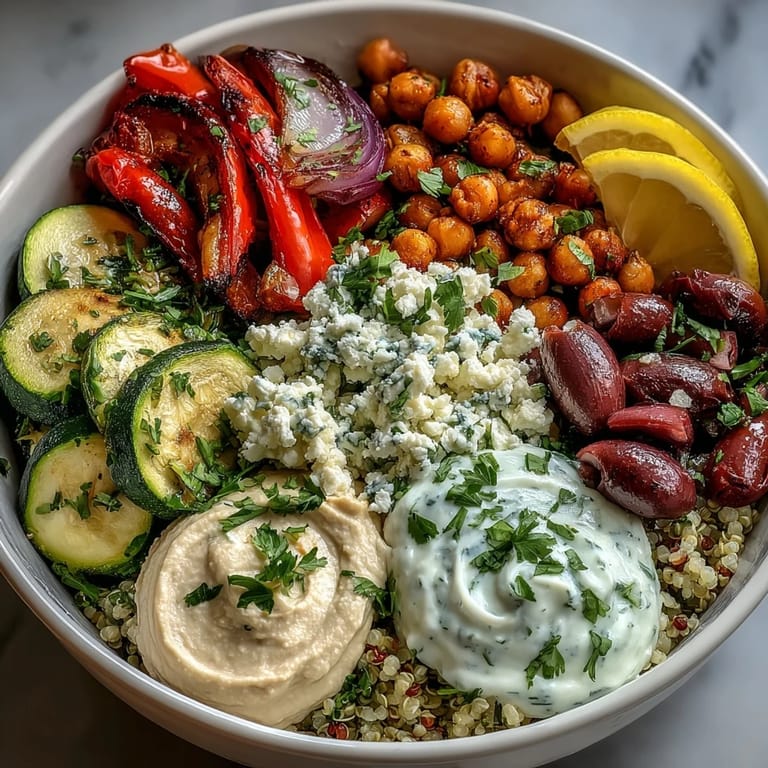
 There's something about assembling a bowl that feels less like cooking and more like building a edible landscape. My first Mediterranean Buddha bowl happened on a Tuesday when I'd promised myself to eat better but refused to spend hours in the kitchen. I grabbed whatever colorful vegetables were lurking in my crisper drawer, threw them on a sheet pan, and discovered that chaos in the oven sometimes produces the most satisfying meals. That bowl changed how I think about weeknight dinners—suddenly healthy eating felt playful instead of obligatory.
I made this for my friend Elena who'd just moved to the neighborhood, and watching her face light up as she tasted that first forkful of warm roasted peppers with cool Greek yogurt told me everything. She kept asking questions between bites, and by the time we finished lunch, she was already planning to make her own version. That's when I realized this bowl isn't just nourishing—it's a conversation starter.
Ingredients
- Quinoa: Rinsing it first removes the bitter coating and prevents mushiness, something I learned after one disaster that taught me patience pays off.
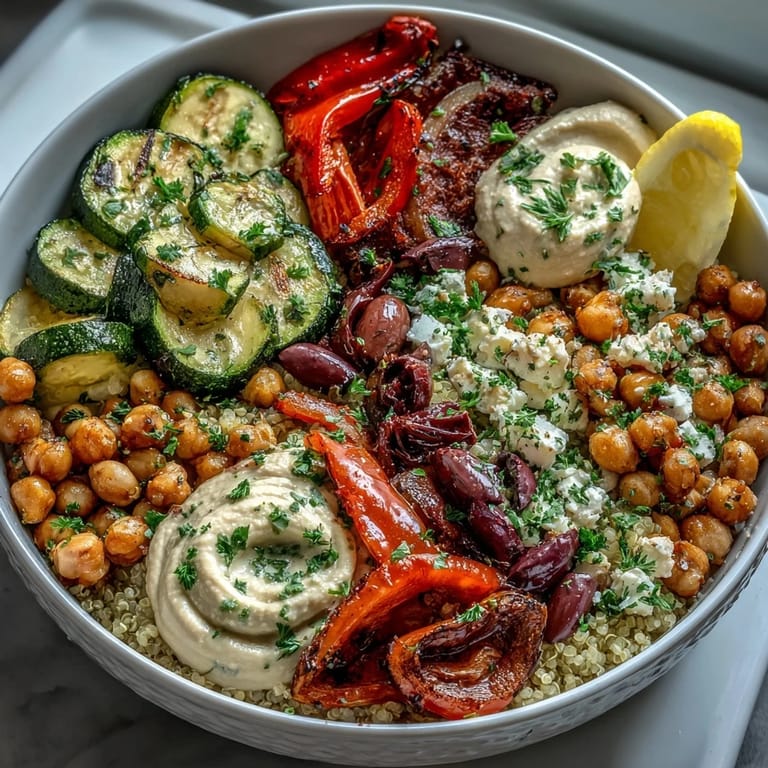
- Zucchini, red bell pepper, red onion, cherry tomatoes: These vegetables roast into something almost unrecognizable from their raw selves—sweeter, tender, with caramelized edges that make you wonder why you don't roast vegetables every single day.
- Olive oil: Use a generous hand here; it's what transforms ordinary vegetables into something golden and irresistible.
- Dried oregano and ground cumin: These spices are quiet but essential, giving the whole bowl its Mediterranean soul without announcing themselves loudly.
- Chickpeas: Warming them gently in a skillet makes them taste fresher than straight from the can, plus they're ready to soak up all those surrounding flavors.
- Kalamata olives, hummus, Greek yogurt, feta cheese: These toppings create layers of flavor and texture—salty, creamy, tangy, crumbly—so every spoonful feels complete.
- Fresh parsley and lemon: The final flourish that makes everything taste brighter and more intentional than it has any right to.
Tired of Takeout? 🥡
Get 10 meals you can make faster than delivery arrives. Seriously.
One email. No spam. Unsubscribe anytime.
Instructions
- Fire up your oven:
- Get it to 425°F and let it preheat while you gather your vegetables; there's something grounding about that moment of preparation before the actual cooking begins.
- Prep and arrange your vegetables:
- Chop everything into roughly the same size so they cook evenly, then scatter them on your baking sheet in a single layer. Drizzle with olive oil, sprinkle your oregano and cumin across them like you're seasoning the earth itself, then toss everything together until coated.
- Let them roast into magic:
- Twenty to twenty-five minutes in the oven while you do something else—they'll turn golden and slightly caramelized around the edges, which is exactly the vibe you're going for.
 Pin It
 My partner calls this my "Sunday bowl" because I make it almost every Sunday now, and somehow it never gets boring. There's something about the ritual of chopping, roasting, and assembling that centers me, like cooking meditation that also happens to nourish my body.
Why Roasting Changes Everything
Raw vegetables are honest and clean, but roasted vegetables are a transformation—caramelization happens, flavors deepen, sweetness emerges. The heat concentrates everything that makes a vegetable worth eating, and by the time they come out of the oven, they taste like an entirely different ingredient. I've converted plenty of vegetable skeptics just by introducing them to properly roasted bell peppers.
The Power of Temperature Contrast
What makes this bowl so satisfying is that every temperature and texture gets represented—warm quinoa, still-warm roasted vegetables meeting cool Greek yogurt, creamy hummus, crumbly feta. Your mouth experiences this entire spectrum in one spoonful, which keeps things interesting and prevents that single-note boredom that comes with eating something monolithic. It's the temperature and texture interplay that elevates this from healthy bowl to genuinely craveable meal.
Building Your Perfect Bowl
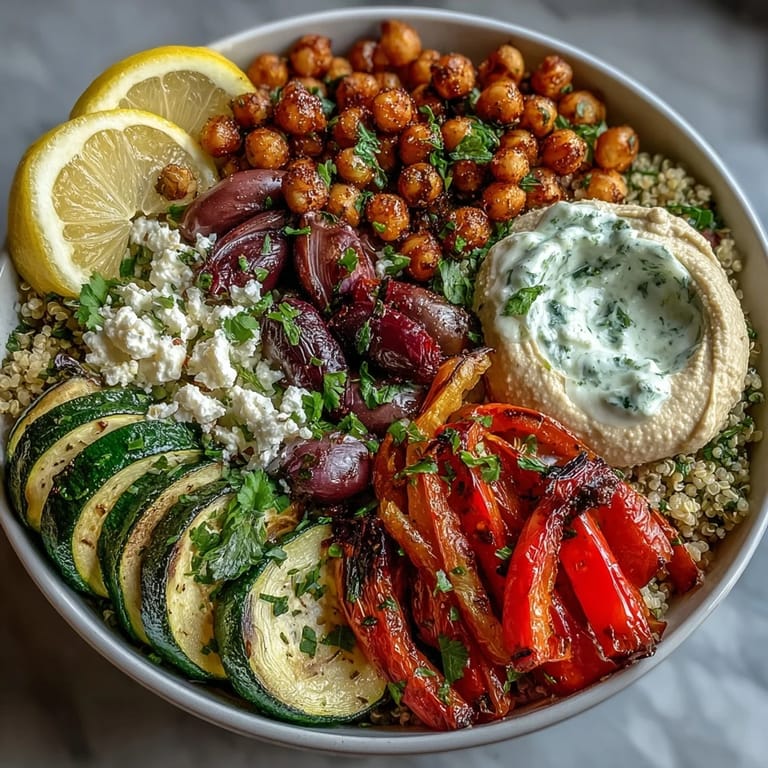
The beauty of a Buddha bowl is that it's a framework, not a formula—you can rearrange the toppings based on what you're craving or what you have. Some days I want more hummus, other days I go heavier on the feta and lighter on the yogurt. The foundation of roasted vegetables and quinoa stays consistent, but everything else is negotiable. Think of it as a template you're allowed to improvise within, which makes it equally suited for meal prep and spontaneous dinner assembly.
- Layer your bowl strategically so each bite contains multiple elements rather than eating all the hummus in the first few spoonfuls.
- Don't be shy with the lemon—a generous squeeze brightens everything and makes the flavors feel more alive.
- If you're meal prepping, keep the Greek yogurt and feta separate until you're ready to eat to maintain their best texture.
 Pin It
 This bowl taught me that nourishing yourself doesn't have to feel like deprivation or complicated technique—it can be colorful, delicious, and done in less than an hour. Make it for yourself on days when you need to feel a little more put-together.
Recipe FAQs
- → Can I make this bowl ahead of time?
Yes, prepare components up to 3 days in advance. Store quinoa, roasted vegetables, and chickpeas separately in airtight containers. Assemble bowls fresh and add garnishes before serving.
- → What grain substitutions work well?
Farro, brown rice, or bulgur make excellent alternatives to quinoa. Adjust cooking time according to package directions. Each grain brings its own texture and nutritional profile to the bowl.
- → How can I add more protein?
Grilled chicken breast, seasoned shrimp, or baked salmon complement the Mediterranean flavors beautifully. For plant-based options, add extra chickpeas, tofu, or a dollop of additional hummus.
- → What vegetables work best for roasting?
Eggplant, artichoke hearts, asparagus, or sweet potatoes roast beautifully alongside the suggested vegetables. Choose seasonal produce for optimal flavor and adjust roasting times as needed.
- → Is this suitable for meal prep?
Absolutely. Portion cooked quinoa, roasted vegetables, and chickpeas into meal prep containers. Keep hummus, yogurt, and feta in separate small containers to maintain freshness. Reheat vegetables and quinoa, then add cold toppings.
- → Can I customize the toppings?
Cucumber slices, roasted red peppers, sun-dried tomatoes, or avocado make wonderful additions. Try pine nuts or pumpkin seeds for crunch. The base bowl is highly adaptable to your preferences and pantry staples.