 Pin It
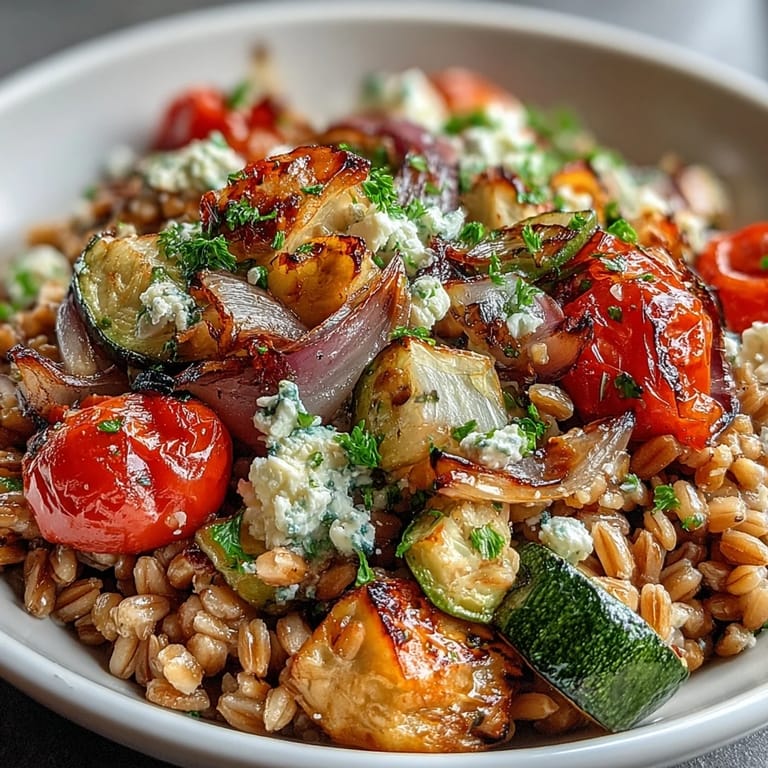
 There's something quietly satisfying about watching farro plump up on the stove while your oven fills with the smell of caramelizing vegetables. I stumbled onto this dish during a late-September afternoon when my farmers market haul was overflowing and I needed something that could handle the abundance without feeling fussy. The beauty of farro with roasted vegetables is that it asks very little of you but rewards you with something that tastes like you spent hours fussing in the kitchen.
I made this for a potluck once where I wasn't sure what everyone ate, and it was the first thing to empty. A friend I hadn't seen in years filled her bowl twice and asked for the recipe before she left, which felt like the highest compliment a home cook can get. That's when I realized this dish has a quiet confidence about it—it doesn't demand attention, but people notice.
Ingredients
- Farro: This chewy whole grain is the soul of the dish, and unlike rice, it holds its texture beautifully even when dressed. Look for pearled farro if you want it to cook faster and feel more tender.
- Red bell pepper, zucchini, red onion, carrot, and cherry tomatoes: This combination gives you color, sweetness, and earthiness all at once. Feel free to swap in eggplant, mushrooms, or winter squash depending on what's in season or what you have hanging around.
- Olive oil for roasting: This is where the magic happens—two tablespoons is enough to coat everything and help the vegetables caramelize without drowning them.
- Thyme and oregano: Dried herbs work perfectly here and they distribute evenly across all those vegetable pieces. If you have fresh herbs, use about three times the amount and add them after roasting.
- Extra-virgin olive oil and balsamic vinegar: This is your dressing, and it's simple by design. The balsamic adds a quiet sweetness that ties everything together.
- Fresh parsley: This bright finish keeps the dish from feeling heavy, so don't skip it even if you're in a hurry.
- Feta cheese: Optional but genuinely transformative—it adds a salty, creamy contrast that makes people close their eyes and eat another bite.
Tired of Takeout? 🥡
Get 10 meals you can make faster than delivery arrives. Seriously.
One email. No spam. Unsubscribe anytime.
Instructions
- Get your oven ready and prep the vegetables:
- Preheat to 425°F and line a baking sheet with parchment paper. Toss your diced peppers, zucchini, onion wedges, carrot slices, and halved tomatoes with two tablespoons of olive oil, then scatter the thyme, oregano, salt, and pepper over everything. This is the moment where you want to make sure the pieces are roughly the same size so they caramelize evenly.
- Roast until golden and tender:
- Spread everything on your sheet in a single layer and roast for 25 to 30 minutes, giving it a stir halfway through. You'll know it's ready when the edges are caramelized and the vegetables have softened but aren't mushy—there should be a little char on the onions and peppers.
- Cook the farro while vegetables roast:
- Rinse your farro under cold water, then combine it in a saucepan with three cups of vegetable broth or water. Bring it to a boil, drop the heat to a simmer, cover it, and let it cook for 25 to 30 minutes until the grains are tender but still have a little chew. If there's excess liquid when it's done, just drain it—you want the grains to stand on their own.
- Bring it all together:
- Transfer your cooked farro to a large bowl, add the roasted vegetables, then drizzle with two tablespoons of extra-virgin olive oil and one tablespoon of balsamic vinegar. Toss everything gently so you don't crush the vegetables or break the grains apart.
- Finish with fresh flavor:
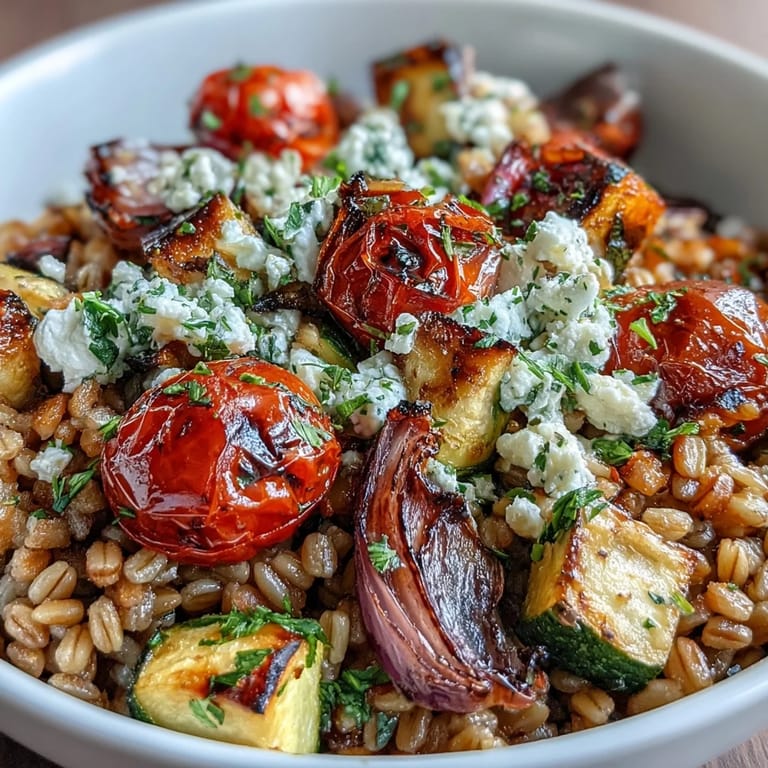
- Stir in the fresh parsley and scatter feta over the top if you're using it. You can serve this warm right out of the bowl, or let it cool to room temperature—both ways are delicious.
 Pin It
 There was a moment during dinner when someone asked if this was restaurant food, and I realized that simple doesn't mean forgettable. This dish proved to me that you don't need complicated techniques or an endless ingredient list to make something memorable—just good things cooked with intention.
Why This Works as Both Main and Side
The protein in farro is quiet but real, so this works perfectly as a vegetarian main without feeling incomplete. But it's also flexible enough to sit alongside grilled chicken or fish if you want to add more substance. I've made it both ways depending on who's coming over, and it adapts without any fussing on your part.
Vegetables You Can Swap In and Out
The beauty of roasted vegetables is that they're forgiving about substitutions. Butternut squash, eggplant, and mushrooms all roast beautifully in that same time frame and temperature, so build your version around what's available at your market or what you already have in the kitchen. The cooking times might shift slightly with thicker or thinner cuts, but nothing drastic enough to throw off your meal.
How to Make It Your Own
This is the kind of recipe that gets better the more you cook it because you start trusting your instincts about flavors and textures. Some days I add a squeeze of lemon at the end, other times I swap the balsamic for red wine vinegar. You might find yourself adding roasted garlic, or a pinch of red pepper flakes, or switching the feta for goat cheese—all of it works.
- Taste as you go and adjust the vinegar and salt to match your preference; every vegetable releases different amounts of liquid.
- If you're making this ahead, store the farro and vegetables separately, then combine them just before serving or a few hours ahead with the dressing.
- Leftovers keep well in the refrigerator for about three days, and the flavors actually deepen as it sits.
 Pin It
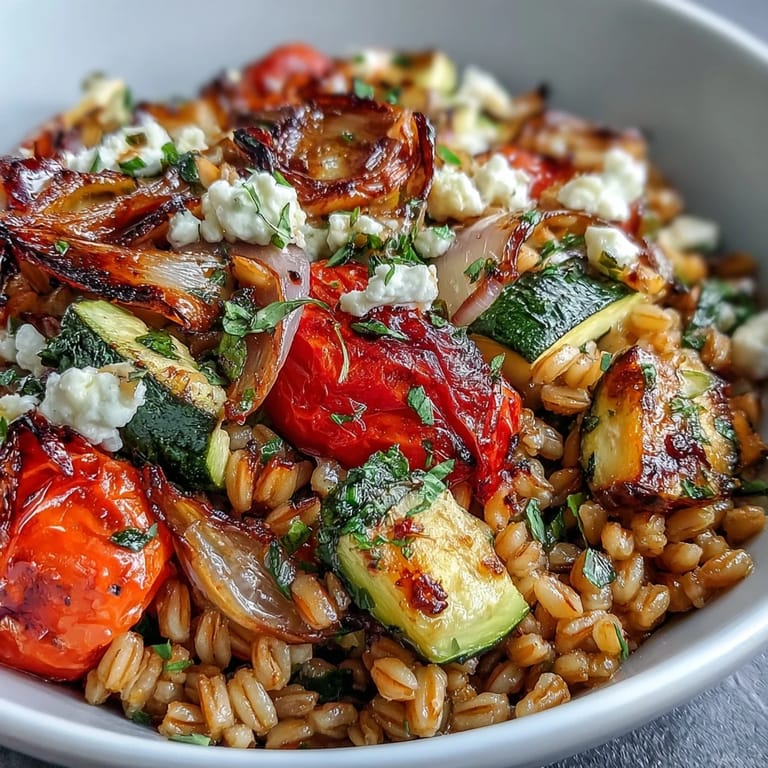
 This dish reminds me that good food doesn't have to be complicated to be meaningful. Make it once and you'll understand why it keeps showing up in my kitchen through every season.
Recipe FAQs
- → Do I need to rinse farro before cooking?
Yes, rinsing farro under cold water removes dust and debris while helping the grains cook more evenly. A quick rinse is all that's needed before adding to your cooking liquid.
- → Can I use other grains instead of farro?
Absolutely. Wheat berries, barley, or spelt work well as substitutes. Adjust cooking time accordingly—these grains may take 5-10 minutes longer than farro.
- → What vegetables work best for roasting?
Root vegetables, bell peppers, zucchini, eggplant, and onions all roast beautifully. Cut pieces uniformly so they cook evenly. Dense vegetables like carrots may need a head start.
- → How do I store leftovers?
Keep in an airtight container in the refrigerator for up to 5 days. The flavors continue to develop. Reheat gently or enjoy cold—the texture remains satisfying either way.
- → Is farro gluten-free?
No, farro is a wheat variety and contains gluten. For a gluten-free alternative, try millet, buckwheat, or quinoa with similar cooking adjustments.