 Pin It
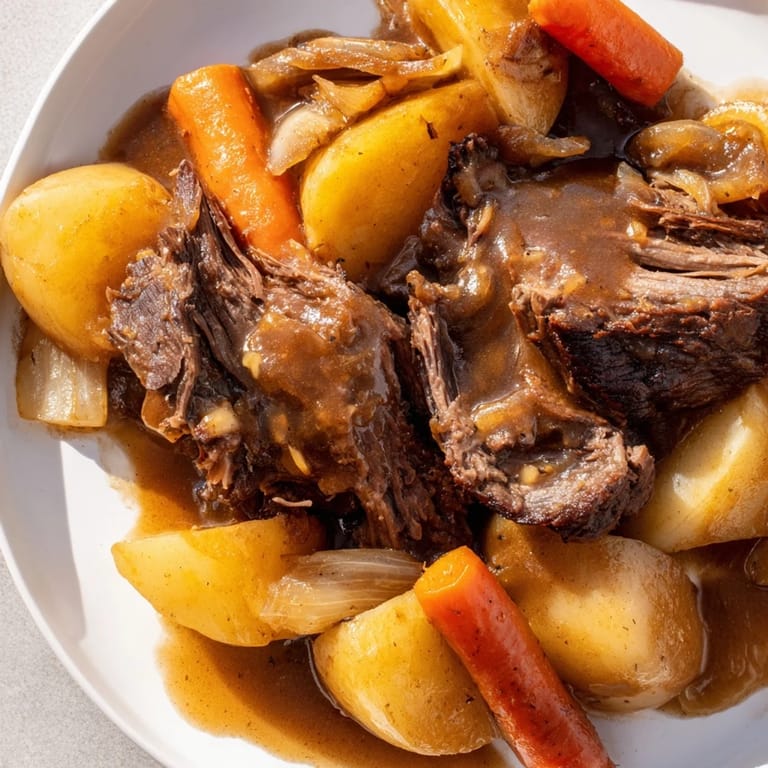
 There's something about the smell of a pot roast braising that fills a kitchen with a kind of quiet comfort. My grandmother used to make this on Sunday afternoons, and I'd wander downstairs to find the house wrapped in that rich, savory aroma long before dinner was ready. Years later, when I finally made my own, I realized the magic wasn't just in the ingredients—it was in the patience, in letting time and heat work together to turn a tough cut of meat into something impossibly tender. This beef pot roast has become my answer to every occasion that calls for something warm, nourishing, and deeply satisfying.
I made this for my in-laws during their first visit to our new place, nervous and hopeful all at once. Three and a half hours of oven time meant I could actually sit down, have coffee, and talk instead of hovering over the stove. When I brought that Dutch oven to the table, the silence that followed—before everyone started talking at once—told me everything I needed to know.
Ingredients
- Chuck roast (3–4 lbs): This cut has marbling and connective tissue that breaks down into gelatin during long cooking, creating that silky, luxurious mouthfeel you're after—don't reach for a leaner cut.
- Kosher salt and black pepper: Season generously before searing; this is your only chance to build a flavorful crust on the meat.
- Olive oil: Use enough to coat the pot bottom well, so the roast sizzles and browns properly, not steams.
- Yukon Gold or Russet potatoes: Yukon Golds hold their shape better and taste buttery; Russets are more forgiving if you prefer them softer.
- Carrots and onions: Cut them into honest chunks—smaller pieces can disappear into the braising liquid and lose their presence.
- Garlic: Smashing it rather than mincing releases its oils and prevents it from burning while braising.
- Beef broth: Use good quality; it's the foundation of your final gravy, so taste it first if you can.
- Dry red wine: A Pinot Noir or similar won't overpower the dish; skip it if you prefer, but it adds depth and a subtle tannin quality.
- Tomato paste: This adds umami and subtle sweetness that rounds out the savory notes beautifully.
- Worcestershire sauce: A splash brings an anchovy-based funk that you won't taste directly but will definitely miss if it's gone.
- Thyme and bay leaves: Fresh thyme is more delicate; dried thyme is more concentrated—either works, just adjust to your preference.
- Flour or cornstarch: Cornstarch creates a silkier, more translucent gravy; flour gives it body and a classic appearance.
Tired of Takeout? 🥡
Get 10 meals you can make faster than delivery arrives. Seriously.
One email. No spam. Unsubscribe anytime.
Instructions
- Set your stage:
- Preheat your oven to 300°F and give yourself a moment to get organized—this is the only fussy part. Pat the roast dry with paper towels; any moisture on the surface will steam it instead of sear it.
- Build your foundation:
- Season all sides of the beef generously with salt and pepper, then heat olive oil in your Dutch oven until it shimmers and just begins to smoke. Lay the roast in and resist the urge to move it—let it sit for 4–5 minutes per side until the surface is deep golden brown.
- Wake up the aromatics:
- Once the roast is out, the pot is yours—add the onions and garlic to that flavorful oil and let them soften for a few minutes until the kitchen smells like dinner is coming. Stir in the tomato paste and cook it briefly until it deepens in color and loses its raw edge.
- Deglaze and build layers:
- Pour in the red wine (or extra broth) and scrape up every crusty, flavorful bit stuck to the pot bottom—this is liquid gold. Return the roast, add the broth, Worcestershire, thyme, and bay leaves, then nestle the potatoes and carrots around everything.
- Let the oven do the heavy lifting:
- Cover the pot and slide it into the oven for 3 to 3½ hours; the beef should be fork-tender and the vegetables completely softened. You'll know it's ready when the meat offers no resistance to your fork.
- Make the gravy:
- Pull out the roast and vegetables and set them on a platter—this is your victory lap moment. Skim the excess fat from the liquid, then whisk flour (or cornstarch) with cold water in a small bowl until completely smooth and lump-free, then stir it into the pot.
- Finish with a whisper of heat:
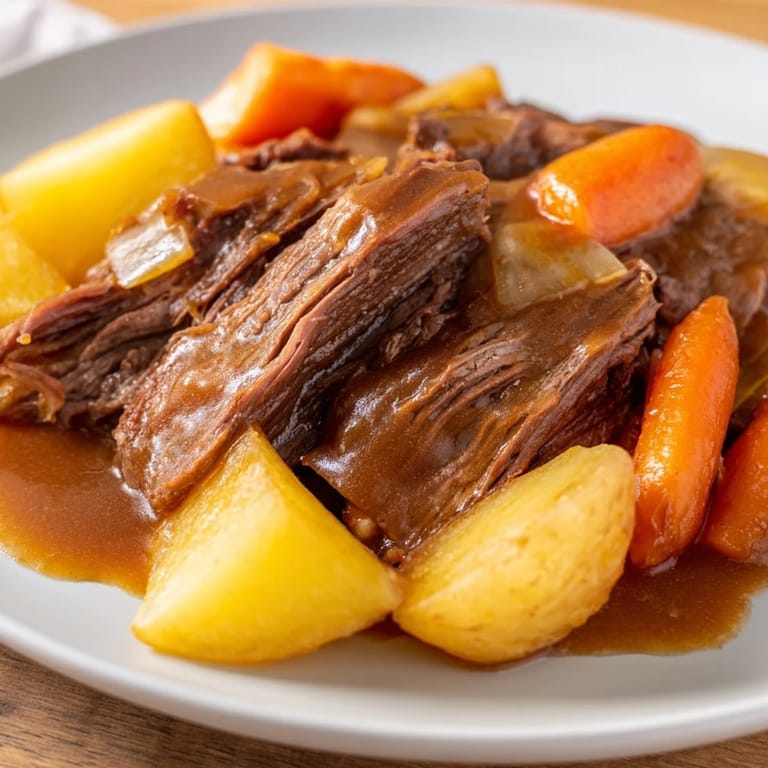
- Simmer over medium heat, whisking almost constantly for 3–5 minutes, until the gravy coats the back of a spoon and looks rich and glossy. Slice the beef, arrange everything on a platter, and pour that gravy over it all.
 Pin It
 I've learned that this dish isn't just about feeding people—it's about creating the kind of meal that makes everyone slow down, take second helpings without asking, and linger at the table long after the plates are empty. That's when I know I've gotten it right.
Why This Dish Endures
Pot roast exists in that rare category of food that tastes better when it's cooler outside and more complicated in your life. It's the kind of dinner you can leave alone, which means you can attend to other things, people, or just your own quiet thoughts while the oven works. There's permission built into this recipe—permission to take your time, to do something imperfect but sincere, and to end the day with something that feels earned.
Variations and Improvisation
This recipe is a skeleton that welcomes additions and swaps. Some cooks swear by parsnips tucked in alongside the carrots, or celery added for earthiness. You can substitute beef with lamb for a completely different character, or add a splash of red wine vinegar at the very end for brightness. The beauty of pot roast is that it's forgiving enough to incorporate what you have on hand or what sounds good to you on a particular afternoon.
Serving and Pairing
Serve this straight from the pot if you're at home, or transfer it to a platter if you want it to look like you spent all day fussing. Crusty bread is essential—it's practically a requirement, not a suggestion. A robust red wine like Cabernet Sauvignon cuts through the richness and feels celebratory, though a simple glass of water is just as honest.
- Leftovers make extraordinary sandwiches the next day, especially with a smear of horseradish mayo.
- This pot roast freezes beautifully; reheat it gently on the stovetop with a splash of broth to restore the gravy's silkiness.
- If you're feeding a crowd, it scales up easily—just add more time and accept that oven space is your only real limitation.
 Pin It
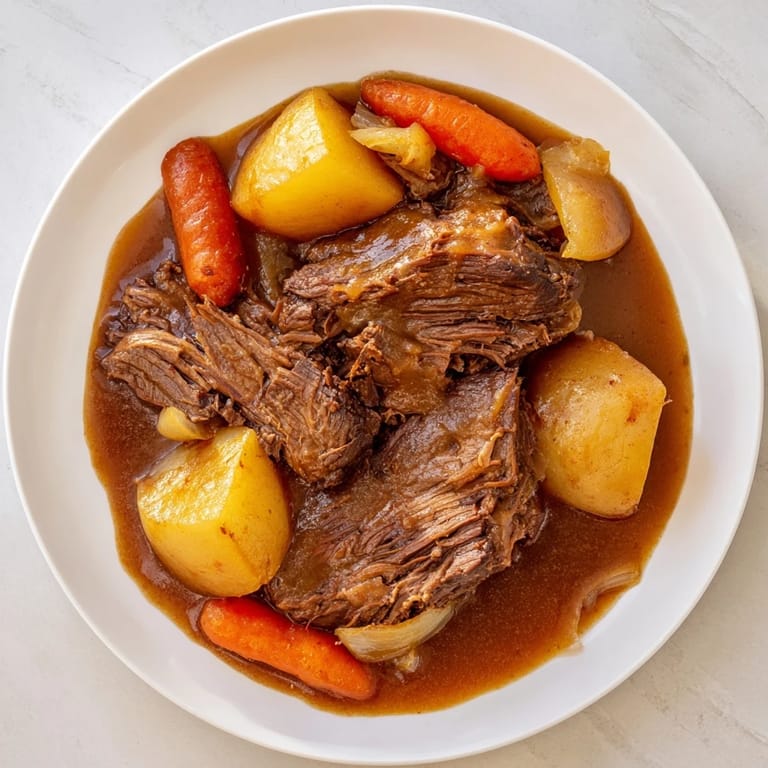
 This pot roast is a meal that asks very little and delivers generously—the kind of cooking that reminds you why you love feeding people in the first place.
Recipe FAQs
- → What cut of beef works best?
Chuck roast is ideal for slow cooking due to its marbling and connective tissue, which breaks down to create tender, flavorful meat.
- → Can I substitute the red wine?
Yes, you can replace red wine with extra beef broth to maintain a rich flavor without alcohol.
- → How long should the roast cook?
Cooking low and slow for about 3 to 3½ hours ensures the meat becomes fork-tender and the vegetables cook through.
- → How is the gravy thickened?
Mixing flour or cornstarch with cold water and whisking it into the braising liquid thickens the gravy to a smooth, glossy finish.
- → What vegetables complement this dish?
Potatoes, carrots, and onions are classic choices. Parsnips or celery can be added for extra flavor and texture.
- → Any tips for serving?
Serve with crusty bread to soak up the gravy or use leftovers for hearty sandwiches.