 Pin It
 My aunt kept a banana bread cooling on her kitchen counter every Sunday morning, and for years I thought it was pure magic—how she made something so soft and fragrant from things as simple as overripe bananas and butter. When I finally asked her for the recipe at twenty-three, she laughed and said there was no trick, just patience and knowing when to stop stirring. That first loaf I baked burned on the edges and stayed gummy in the middle, a humbling reminder that even simple recipes demand attention. Now, whenever I smell bananas hitting that sweet brown-spotted stage, I know something good is about to happen in my kitchen.
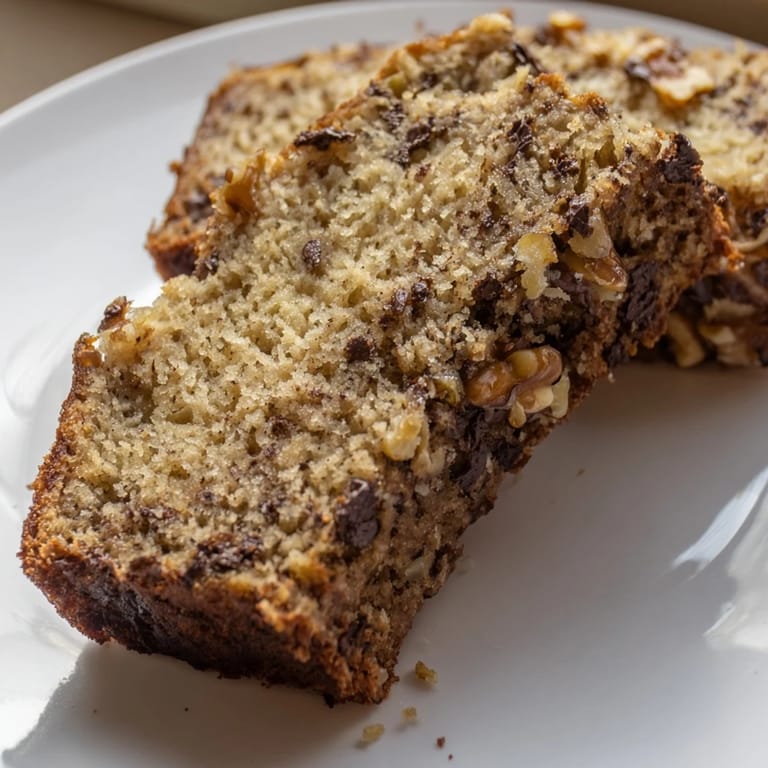
I made this for my best friend the morning after she helped me move apartments, and watching her eyes light up when she bit into a warm slice felt like the world's simplest thank you. She asked for the recipe right then and there, crumbs still on her chin, and now she texts me photos of her own loaves—some picture-perfect, some slightly lopsided, all of them loved.
Ingredients
- 3 large ripe bananas, mashed: Look for ones with plenty of brown spots and even a bit of dark coloring on the skin—that's when they're sweetest and easiest to mash.
- 2 large eggs: They bind everything together and add a subtle tenderness that makes people ask if there's a secret ingredient.
- 120 ml unsalted butter, melted and cooled: Melting it first means it blends smoothly without needing to cream anything, which keeps this recipe blessedly simple.
- 100 g granulated sugar and 50 g brown sugar: The mix of both gives you sweetness that feels balanced rather than one-note, and the brown sugar adds a slight molasses depth.
- 1 tsp vanilla extract: It rounds out the banana flavor instead of competing with it, so use real vanilla if you have it.
- 220 g all-purpose flour: Measure by spooning and leveling rather than scooping straight from the bag—this small habit prevents a dry loaf.
- 1 tsp baking soda: This is what makes it rise gently and gives you that tender crumb; don't skip it or substitute baking powder.
- ½ tsp salt: It might seem small, but it makes the banana flavor sing instead of fade into the background.
- ½ tsp ground cinnamon (optional): Even a pinch adds warmth without announcing itself, like a whisper rather than a shout.
- 80 g chopped walnuts or pecans and 70 g chocolate chips: These are your playground—add them both, pick one, or swap for dried cranberries or coconut flakes based on what speaks to you.
Tired of Takeout? 🥡
Get 10 meals you can make faster than delivery arrives. Seriously.
One email. No spam. Unsubscribe anytime.
Instructions
- Preheat and prepare:
- Set your oven to 175°C (350°F) and grease your loaf pan well or line it with parchment paper—this small step is what keeps your bread from sticking and crumbling when you turn it out.
- Combine the wet ingredients:
- Whisk together your mashed bananas, eggs, cooled melted butter, both sugars, and vanilla in a large bowl until everything is smooth and well blended. You want the bananas broken down completely so they're almost like a puree.
- Mix the dry team:
- Sift your flour, baking soda, salt, and cinnamon into a separate bowl—sifting matters here because it breaks up any lumps and distributes the baking soda evenly so your loaf rises uniformly.
- Marry wet and dry gently:
- Pour the dry ingredients into the wet bowl and fold with a spatula using slow, deliberate strokes—think of it like you're being careful not to wake something sleeping. Stop the moment you don't see any white streaks of flour, even if there are small lumps; overmixing is the enemy of tender crumb.
- Add your mix-ins:
- Fold in your nuts and chocolate chips if you're using them, being just as gentle as before so they distribute evenly without deflating the batter.
- Pour and smooth:
- Transfer the batter to your prepared pan and use a spatula to gently smooth the top so it bakes evenly—don't press down, just guide it into place.
- Bake with patience:
- Slide it into your preheated oven for 50 to 60 minutes, watching around the 45-minute mark for golden browning. Insert a toothpick into the center—it should come out clean or with just a few moist crumbs; if it's wet batter, you need more time.
- Cool properly:
- Let the bread rest in the pan for 10 minutes so it firms up enough to move without breaking, then turn it out onto a wire rack to cool completely before slicing, which lets the structure set.
 Pin It
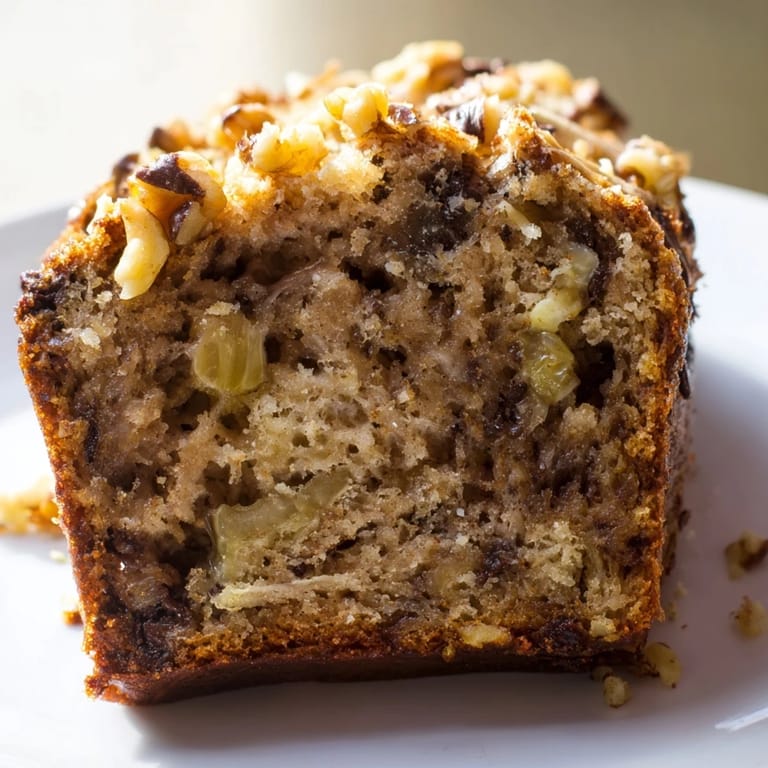
 One winter afternoon, I took a still-warm slice to my neighbor who had just come home from the hospital, and she said it was the first thing in days that tasted like comfort instead of medicine. That's when I realized this bread is less about technique and more about what it means to someone tired or sad or just in need of something gentle and real.
Why Those Ripe Bananas Matter So Much
There's a reason every baker insists on spotty bananas, and it's not just old wisdom passed down without reason. As bananas ripen, their starches convert into sugars, which means a brown-spotted banana is literally sweeter than a yellow one—and that sweetness is doing the heavy lifting in this recipe. If you use bananas that are only partly ripe, you'll find yourself wanting to add more sugar to get the same flavor, which throws off the balance and can make the bread too sweet or too dense. I learned this the hard way by grabbing bright yellow bananas from the fruit bowl, and the resulting loaf was fine but forgettable; now I actively wait for them to develop their spots, sometimes intentionally ripening them further by leaving them on the counter for an extra day or two.
The Architecture of Not Overmixing
When you fold wet and dry ingredients together, what you're really doing is hydrating the flour and distributing the baking soda without developing gluten, which is the protein network that makes bread tough and chewy. Every time you stir or mix vigorously, you're encouraging those gluten strands to form, which is wonderful for bread dough but exactly what you don't want in banana bread. The trick is to use a spatula and fold with slow, deliberate movements—imagine folding a delicate piece of fabric rather than stirring soup. The moment you stop seeing white flour streaks is the moment you stop, even if there are small lumps remaining; those lumps will disappear during baking and what you'll have is a crumb that's tender enough to fall apart on your tongue.
Ways to Personalize Your Loaf
This recipe is sturdy enough to accept your own preferences without falling apart, which is what makes it so reliable. You can swap the walnuts for pecans, almonds, or even seeds if you're avoiding tree nuts; you can fold in chocolate chips, dried cranberries, shredded coconut, or nothing at all. Some mornings I add a pinch of nutmeg alongside the cinnamon for extra warmth, and other times I add a tablespoon of honey in with the wet ingredients for a deeper sweetness. The baseline recipe is strong enough that these variations feel like refinements rather than experiments, so feel free to adjust based on what's in your pantry or what you're craving.
- A tablespoon of honey or molasses deepens the flavor and adds subtle moisture that makes the loaf keep even longer.
- A sprinkle of cinnamon sugar on top before baking gives you a subtle crunch and looks intentional without being fussy.
- Mashing your bananas by hand or with a fork instead of a blender keeps little pieces throughout, which some people find more interesting than a smooth puree.
 Pin It
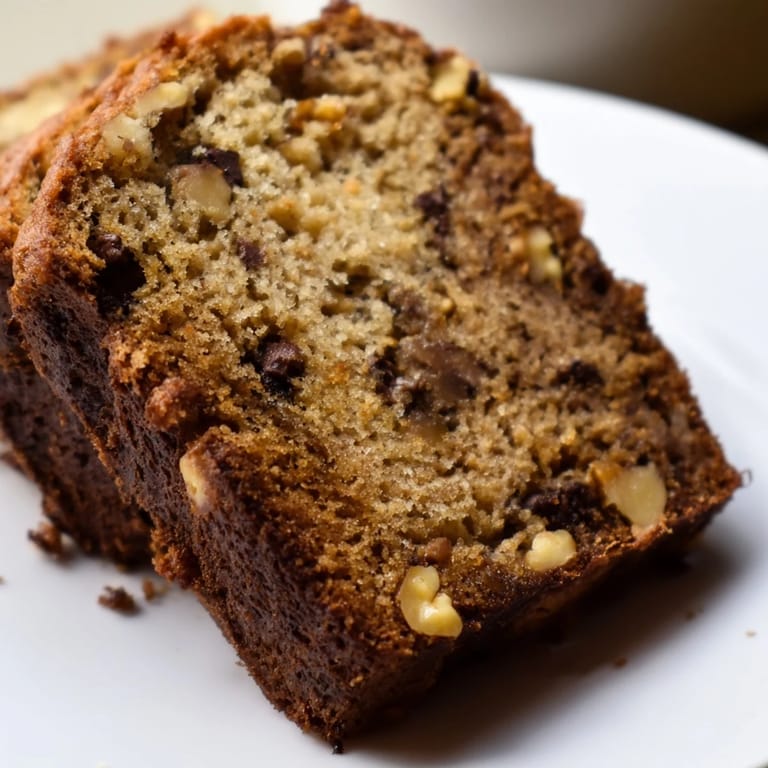
 Banana bread isn't fancy or surprising, and maybe that's exactly why it endures—it shows up warm and honest when you need it, asking nothing in return except a quiet moment and a cup of something hot to drink.
Recipe FAQs
- → How do ripe bananas affect the loaf?
Very ripe bananas add natural sweetness and moisture, creating a tender, flavorful loaf.
- → Can I substitute the nuts in the loaf?
Yes, walnuts or pecans work well, but you can also use seeds or omit them for a nut-free version.
- → What is the best way to check doneness?
Insert a toothpick into the center; it should come out clean or with a few moist crumbs when done.
- → How can I make the loaf dairy-free?
Replace the butter with a plant-based alternative to keep the loaf moist without dairy.
- → Can chocolate chips be added to this loaf?
Yes, folding in chocolate chips adds sweetness and a pleasant texture contrast.