 Pin It
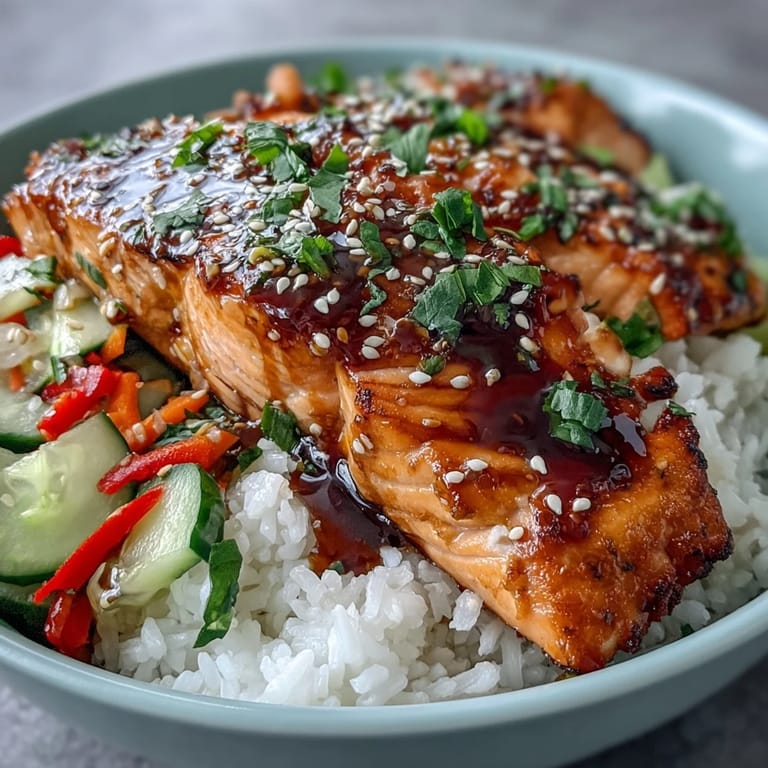
 My neighbor brought over a takeout container one evening, and I remember tasting this glossy, ginger-kissed salmon and thinking, 'I could absolutely make this at home.' Turns out, it wasn't complicated at all—just salmon, a few pantry staples, and some vegetables I already had in the crisper drawer. Now whenever I'm short on time but want something that feels intentional and nourishing, this bowl comes together in barely forty minutes.
I made this for my sister's book club potluck, and she told me later that people kept asking for the recipe all night—not the website, but specifically from me. That moment stuck with me, knowing something I'd whipped together in my own kitchen made people feel cared for.
Ingredients
- Salmon fillets (4, about 150 g each): Look for bright pink or orange flesh with no dark spots or strong fishy smell; the fresher it is, the better the final taste.
- Soy sauce (3 tbsp): This is your umami backbone—don't skip it or water it down, and grab tamari if you need gluten-free.
- Honey (2 tbsp): It balances the salty soy and helps create a glaze that clings to the fish beautifully when baked.
- Fresh ginger, grated (1 tbsp): Use a microplane if you have one, or mince it finely so it distributes evenly throughout the glaze.
- Garlic, minced (2 cloves): Raw garlic works fine here, but if you prefer a milder flavor, you can cook the glaze for an extra minute before brushing on the salmon.
- Rice vinegar (1 tbsp): This adds brightness and keeps the glaze from tasting one-note; regular vinegar will work but might taste sharper.
- Sesame oil (1 tbsp): A little goes a long way—use toasted sesame oil for deeper flavor, and measure carefully because it's potent.
- Jasmine or sushi rice (2 cups uncooked): Jasmine rice is slightly floral and fluffy, while sushi rice is stickier; either one works depending on your preference.
- Carrots, cucumber, and red bell pepper (1 cup each, julienned): Cut them thin and uniform so they feel delicate on the palate and look intentional in the bowl.
- Edamame (1 cup, shelled and cooked): Frozen edamame is perfectly fine and saves you a step; thaw it if you want it warm or leave it cold for texture contrast.
- Toasted sesame seeds (2 tbsp): Toast them yourself if you can—the smell alone is worth it, and they taste nuttier than the pre-toasted versions.
- Scallions (2, thinly sliced): Slice just before serving so they stay crisp and bright green.
- Lime wedges (optional, for serving): A squeeze of fresh lime lifts everything and adds a finish that feels intentional.
Tired of Takeout? 🥡
Get 10 meals you can make faster than delivery arrives. Seriously.
One email. No spam. Unsubscribe anytime.
Instructions
- Rinse and cook the rice:
- Run the rice under cold water in a fine mesh strainer, stirring gently with your fingers until the water clears—this removes the starch so each grain stays separate. Combine with water in a saucepan, bring to a boil, then cover and simmer on low heat for 15 minutes until the liquid is absorbed.
- Let the rice rest:
- Remove from heat, keep it covered, and let it sit for 10 minutes without peeking—this final resting time lets the grains firm up and makes them easier to separate.
- Mix the glaze:
- Whisk soy sauce, honey, ginger, garlic, rice vinegar, and sesame oil in a small bowl until the honey dissolves completely and everything looks smooth. If you want a thicker glaze that coats the salmon more heavily, whisk cornstarch with 1 tablespoon of water and stir it in.
- Prepare the oven and salmon:
- Preheat your oven to 200°C (400°F) and line a baking sheet with parchment paper so cleanup is effortless. Pat the salmon dry with a paper towel, then arrange the fillets skin-side down and brush generously with the glaze, reserving about 3 tablespoons for drizzling later.
- Bake the salmon:
- Slide the sheet into the oven and bake for 12 to 14 minutes, watching until the salmon flakes easily when you press it gently with a fork and the edges look opaque. The salmon will continue cooking slightly after you remove it, so don't overbake.
- Finish the glaze (optional):
- Pour the reserved glaze into a small saucepan and bring it to a simmer over medium heat, stirring occasionally until it thickens slightly—this takes about 1 to 2 minutes if you added cornstarch. Let it cool for a minute so it doesn't split when you drizzle it over the warm salmon.
- Prep the vegetables:
- While the salmon bakes, julienne the carrots, cucumber, and bell pepper with a sharp knife or mandoline, keeping the cuts thin and even so they look polished in the bowl. If you're prepping ahead, store them in cold water to keep them crisp.
- Assemble the bowls:
- Divide the fluffy rice among four bowls, then top each one with a salmon fillet positioned in the center. Arrange the vegetables and edamame around the salmon like you're composing a small edible painting.
- Garnish and serve:
- Drizzle the extra glaze over the bowl, then sprinkle with toasted sesame seeds and sliced scallions for color and crunch. Serve with lime wedges on the side so people can squeeze as much brightness as they want.
 Pin It
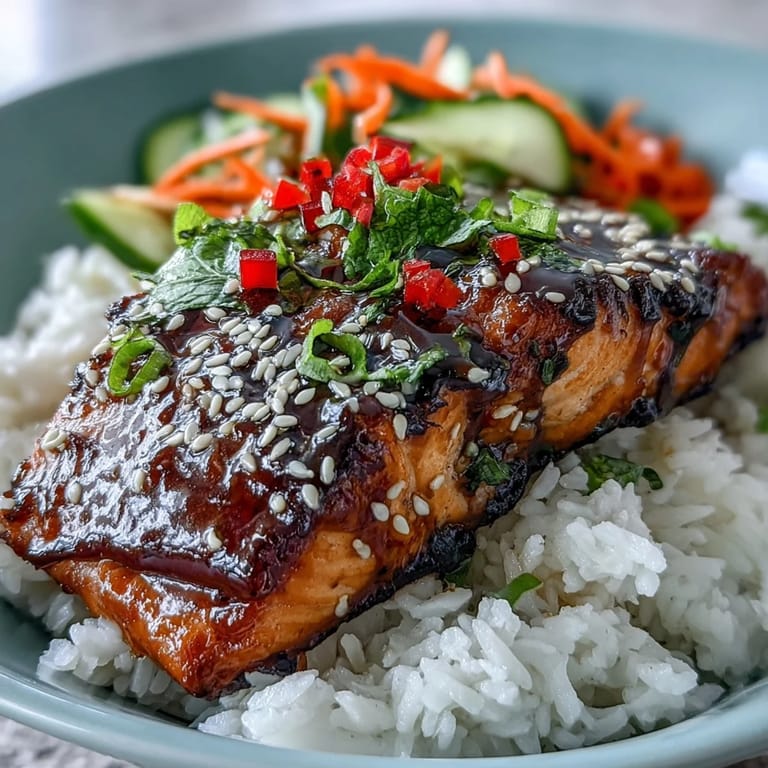
 My daughter, who normally picks at fish, sat down with this bowl and asked for seconds. I realized in that moment that it's not always about making something fancy—it's about making something clean and honest that lets each ingredient shine.
Why the Components Matter
Every element in this bowl pulls its weight. The rice is the canvas, neutral enough to let the glaze take center stage but flavorful enough that you actually want to eat it on its own. The vegetables add crunch and color, cutting through the richness of the salmon so the whole experience feels balanced rather than heavy. The edamame brings protein and a little earthiness that keeps everything interesting, and the glaze—that's the magic that ties it all together, making you feel like you're eating something intentional rather than just throwing food on a plate.
Timing Without Stress
The beauty of this recipe is that nothing needs to happen at exactly the same moment. Start your rice first—it takes the longest, and you can let it rest while everything else gets ready. The salmon itself bakes hands-off, so you can slice vegetables, arrange bowls, and pour a drink without rushing. If you prep your vegetables earlier in the day and keep them cold, assembly takes maybe five minutes, which means you can serve this on a weeknight without it feeling like work.
Variations That Keep It Fresh
Once you've made this a few times, you'll start seeing where your own preferences live. Some nights I use brown rice or quinoa for extra earthiness, other times I add sliced avocado because I want creaminess alongside the crisp vegetables. A friend mentioned pickled ginger one evening, and now that's my default—it adds a little sourness and heat that makes me reach for more salmon. You can also dial the glaze up or down depending on how bold you want the flavors, and if you have tamari on hand instead of soy sauce, the bowl tastes just as good and nobody with gluten sensitivities has to sit it out.
- Brown rice or quinoa swaps in beautifully if you want more fiber and a heartier grain base.
- A thin slice of avocado on top adds richness without drowning out the other flavors.
- Pickled ginger brings brightness and a little spice that makes the whole bowl more interesting.
 Pin It
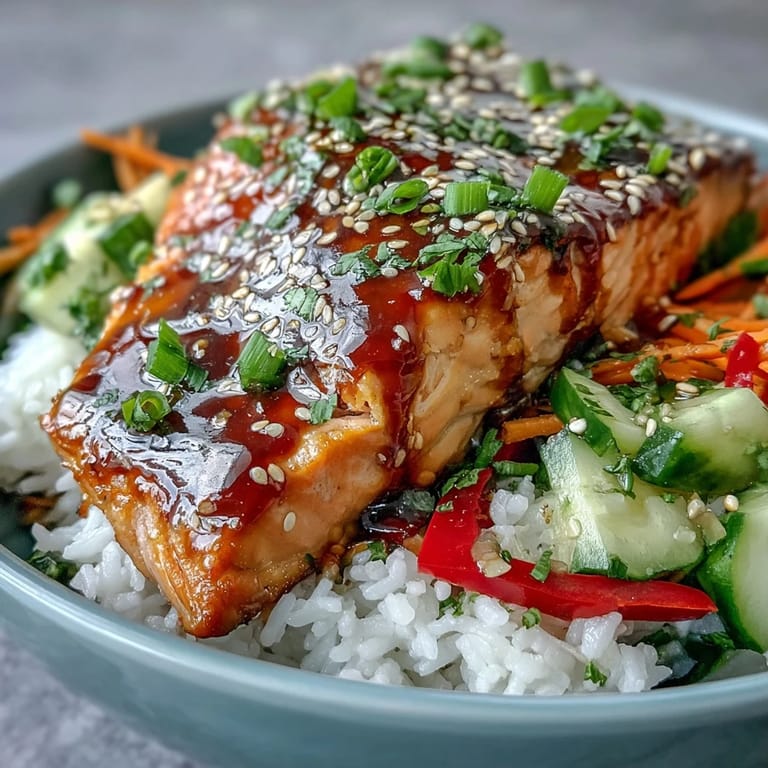
 This bowl has become my answer to the question 'What should we make for dinner?' because it's simple enough for a Tuesday night but special enough that it feels like you tried. That's the kind of recipe worth keeping close.
Recipe FAQs
- → Can I use frozen salmon fillets?
Yes, frozen salmon works well. Thaw completely in the refrigerator overnight before glazing and baking. Pat dry thoroughly to ensure the glaze adheres properly.
- → What vegetables can I substitute?
Snap peas, shredded cabbage, steamed broccoli, or roasted sweet potatoes work beautifully. The key is maintaining a mix of colors and crunch for contrast.
- → How do I store leftovers?
Store components separately in airtight containers. Rice keeps 4-5 days, salmon 3 days. Reheat salmon gently to prevent drying, and assemble bowls fresh when serving.
- → Can I make this gluten-free?
Absolutely. Replace regular soy sauce with tamari or coconut aminos. Verify all other ingredients, particularly the rice vinegar, are certified gluten-free.
- → Can I grill the salmon instead?
Grilling works perfectly. Brush with glaze and grill over medium-high heat for 4-5 minutes per side. The smoky char complements the ginger-soy flavors beautifully.
- → What rice alternatives work well?
Brown rice, quinoa, cauliflower rice, or even noodles like soba or udon make excellent bases. Adjust cooking times according to your chosen grain.